
Textured ceilings, known variously as popcorn, stipple or vermiculite ceilings, were standard in Australian homes from the 1960s through to the 1980s. They hid plasterboard joins cheaply and absorbed sound. Today most homeowners want them gone, because they collect dust, they are impossible to clean, they yellow, and they date a room instantly.
Before anyone touches one, there is a question that has to be answered first.
The asbestos question comes before everything else
Textured ceiling coatings applied before the late 1980s may contain asbestos. Asbestos was not fully banned in Australian building products until 1 January 2004, and ceiling texture is one of the materials where it turns up regularly.
This is not a minor consideration to be worked around. Intact textured ceiling is stable and safe. Scraping, sanding or water-soaking it is precisely the action that releases fibres, and a textured coating that is being removed is treated as friable asbestos, the most hazardous category, because it crumbles to dust under hand pressure.
The rule is simple: if the home was built or renovated before 1990, have the ceiling tested before anything disturbs it.
Testing means a small sample sent to a NATA-accredited laboratory. It is inexpensive and takes a few days. Home kits are not appropriate for this.
If the result is positive, removal in Victoria is work for a licensed asbestos removalist holding a Class A licence, which is required for friable asbestos regardless of the area involved. This is regulated by WorkSafe Victoria. It is not a job to take on yourself, and no reputable painter or plasterer will touch it.
If the result is negative, you have several good options.
Option 1: scraping and reskimming
The traditional approach. The ceiling is sprayed with water to soften the texture, scraped back, then skim-coated with jointing compound, sanded and painted.
Suits: ceilings where the texture is thin and the plasterboard beneath is sound.
Watch for: ceilings that have already been painted over. Paint seals the texture and stops it absorbing water, which makes scraping far slower and much more likely to damage the board underneath. A painted textured ceiling often costs more to strip than to cover.
This is messy, slow work. The room has to be fully sheeted, and the dust goes everywhere regardless of how well it is contained.
Option 2: skim coating over the top
Rather than removing the texture, the whole ceiling is skimmed with two or three coats of compound to bury it, then sanded flat and painted.
Suits: light to medium texture on a ceiling that is structurally sound and not sagging.
Advantages: far less mess, faster, and nothing is disturbed. Where a ceiling has tested clear but you would still rather not generate dust, this is the calmer route.
Limits: heavy texture may need several coats to disappear, and it adds a small amount of weight to the ceiling.
Option 3: overboarding
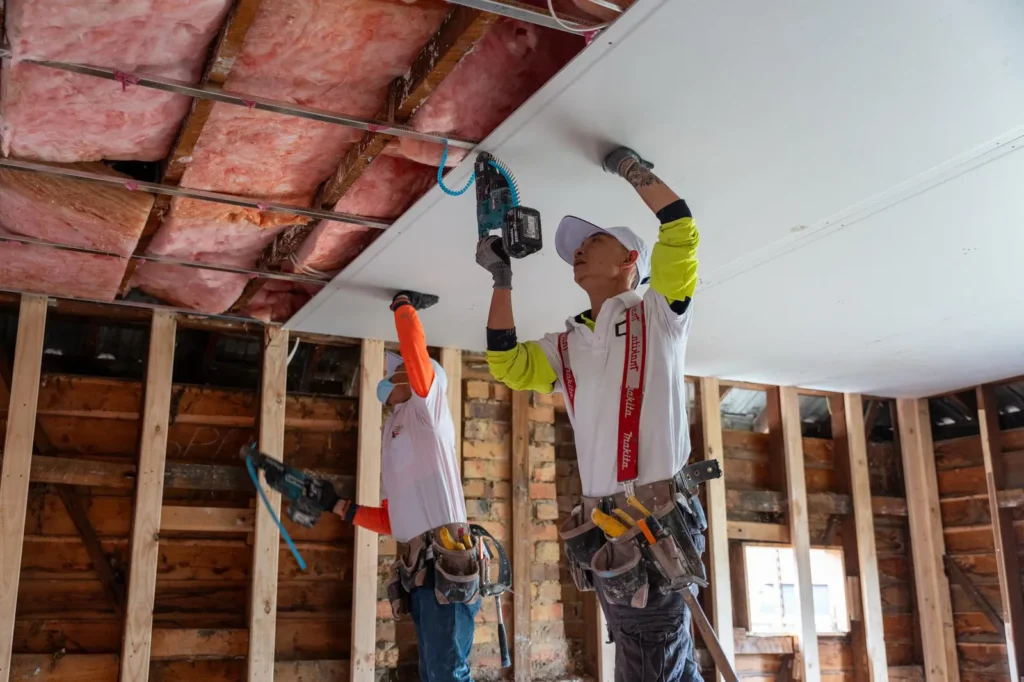
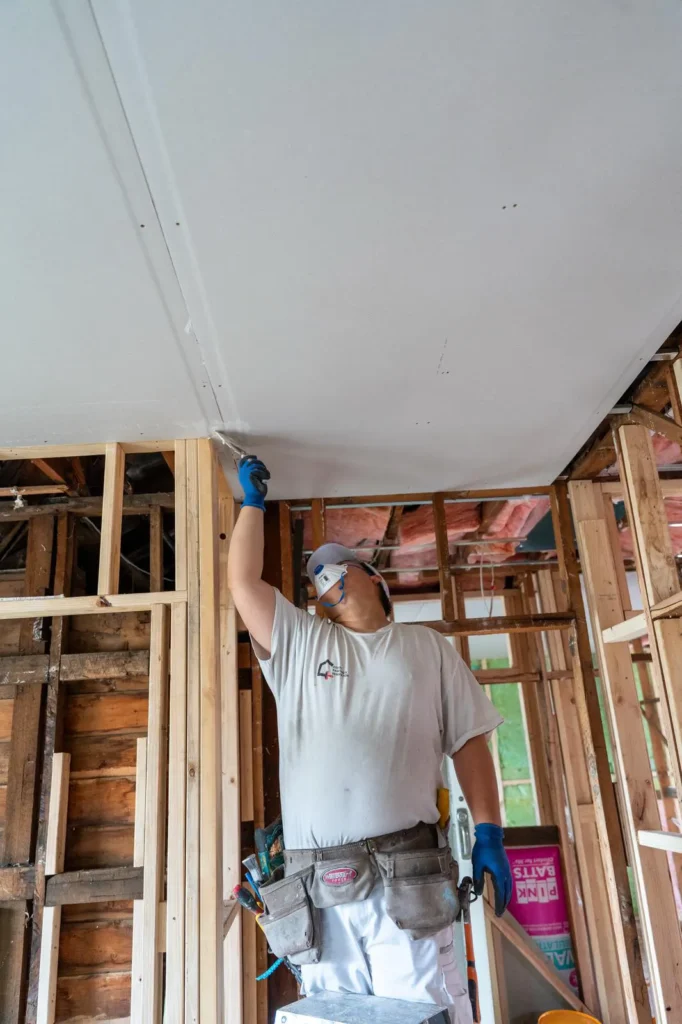
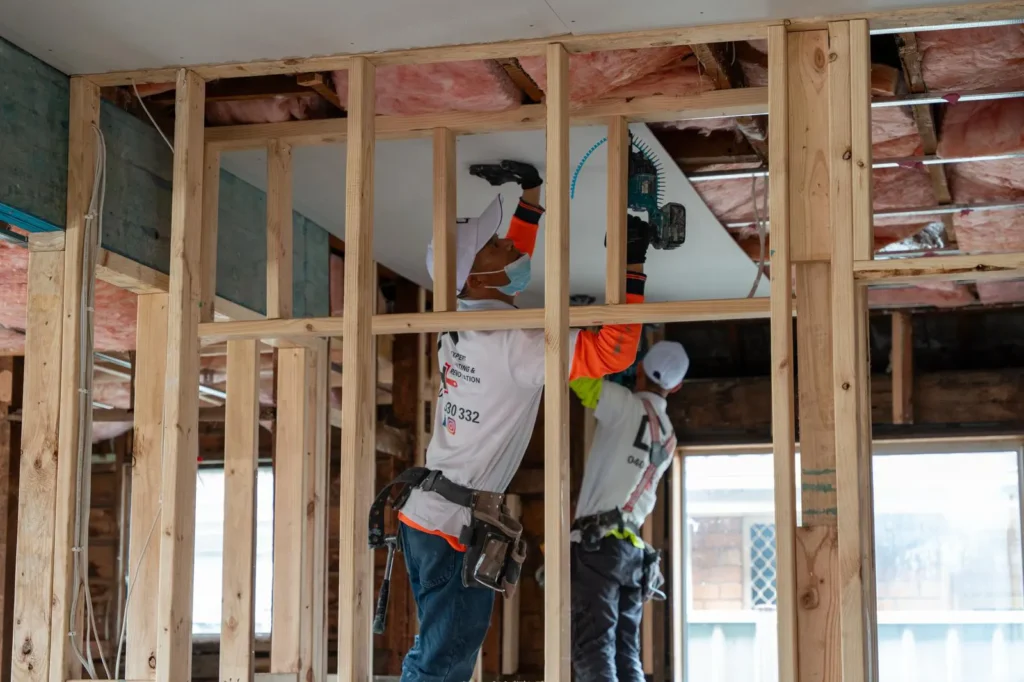
New plasterboard is fixed straight over the existing ceiling, then set, sanded and painted. The old ceiling is never disturbed.
Suits: heavily textured ceilings, ceilings in poor condition, and any situation where you want a guaranteed flat finish.
Advantages: the best finish of the three, and the only option that leaves the original surface completely untouched. Where asbestos is present but the ceiling is intact and a licensed removal is not practical, overboarding is sometimes recommended as a containment approach, though that decision needs professional advice specific to the property.
Limits: it lowers the ceiling by around 10mm, and cornices, light fittings, downlights and ceiling roses all need to be removed and reinstated.
Comparing the three
| Scrape and reskim | Skim over | Overboard | |
|---|---|---|---|
| Dust and mess | High | Low | Low |
| Finish quality | Good | Good | Best |
| Ceiling height lost | None | Negligible | About 10mm |
| Works on heavy texture | Difficult | Sometimes | Yes |
| Works on painted texture | Poorly | Yes | Yes |
| Cornice and fittings | Usually stay | Usually stay | Must be redone |
| Relative cost | Medium | Lowest | Highest |
What happens to the cornice
This catches people out. Many textured ceilings from this era sit against a plain square-set edge or a simple cove cornice, and once the ceiling is flat and modern, an old cornice can look wrong.
If you are overboarding, the cornice is coming off anyway, so it is the natural moment to change profile. If you are scraping or skimming, the cornice usually stays, and the join between new ceiling and old cornice needs care to avoid a visible line.
Lighting is the moment to decide
A flat ceiling shows everything. Any light that washes across the surface at a shallow angle, which includes most downlights close to a wall, will reveal imperfections that a textured ceiling used to hide.
If you are changing lighting, do it during the ceiling work rather than after. Patching a flat ceiling for new downlights afterwards is a visible repair in exactly the surface that shows repairs most clearly.
Getting it done properly
Expert Painting and Renovation is a family-run, Aussie-local company based in Richmond with more than 9 years of experience on Melbourne homes. We handle plastering, ceiling repairs and interior painting as one job, which matters here, because a ceiling that is stripped by one trade and painted by another tends to produce arguments about whose finish the visible flaw belongs to.
We will tell you honestly which of the three options suits your ceiling, and we do not proceed on any pre-1990 ceiling until it has been tested. If your ceiling also shows water stains, that needs resolving first. See our portfolio or the suburbs we cover on our service areas page.
FAQ
How do I know if my textured ceiling has asbestos? The only reliable way is laboratory testing of a sample by a NATA-accredited laboratory. Age is an indicator, not an answer. Have any pre-1990 ceiling tested before it is disturbed.
Can I scrape a popcorn ceiling myself? Not until it has been tested and cleared. Even then it is heavy, dusty work that frequently damages the plasterboard underneath, and an over-wetted ceiling can sag.
How long does it take? A single room is typically one to three days depending on the method and drying time between coats. A whole house takes considerably longer, and the rooms are unusable while work is in progress.
Will removing the texture make the room noisier? Slightly. Textured coatings absorb a small amount of sound. Most people do not notice the difference in a furnished room.
Is it worth doing before selling? Usually yes. A textured ceiling reads as dated to buyers and is one of the cheaper changes that visibly modernises a room.
About Expert Painting & Renovation
Expert Painting and Renovation is an Aussie-local, family-run company based in Richmond, Melbourne, with more than 9 years of experience in residential and commercial painting and renovation. Our specialists deliver premium workmanship, timely service and durable finishes designed for Melbourne homes.
- Ceiling crack repairs
- Sagging ceiling restoration
- Water‑damaged ceiling repairs
- Cornice replacement
- Full plastering services
- Interior & exterior painting
- Weatherboard restoration
- Deck & timber maintenance
- Roof painting
- Rendering & texture coating
- Commercial Painting
- Plastering Services
- House Painting
Whether you need maintenance advice, a single-room refresh or a full home makeover, our team is just a call away.
📍 Our Service Areas Across Melbourne, the Mornington Peninsula, Surf Coast & Phillip Island
Melbourne & Bayside
- Expert Painting and Renovation in Richmond
- Expert Painting and Renovation in St Kilda
- Expert Painting and Renovation in South Yarra
- Expert Painting and Renovation in Malvern
- Expert Painting and Renovation in Hawthorn
- Expert Painting and Renovation in Kew
- Expert Painting and Renovation in Balwyn
- Expert Painting and Renovation in Mount Waverley
- Expert Painting and Renovation in Ringwood
- Expert Painting and Renovation in Doncaster
- Expert Painting and Renovation in Hampton
- Expert Painting and Renovation in Frankston
- Expert Painting and Renovation in Mount Eliza
- Expert Painting and Renovation in Mornington
- Expert Painting and Renovation in Mount Martha
- Expert Painting and Renovation in Rosebud
- Expert Painting and Renovation in Sorrento
Phillip Island & Bass Coast
- Expert Painting and Renovation in Flinders
- Expert Painting and Renovation in Somers
- Expert Painting and Renovation in San Remo
- Expert Painting and Renovation in Cape Woolamai
- Expert Painting and Renovation in Cowes
- Expert Painting and Renovation in Coronet Bay
- Expert Painting and Renovation in Tootgarook
- Expert Painting and Renovation in Rye
- Expert Painting and Renovation in Blairgowrie
- Expert Painting and Renovation in Portsea
- Expert Painting and Renovation in Inverloch
- Expert Painting and Renovation in Kilcunda
- Expert Painting and Renovation in Ventnor
- Expert Painting and Renovation in Newhaven
Surf Coast & Bellarine Peninsula
- Expert Painting and Renovation in Geelong
- Expert Painting and Renovation in Torquay
- Expert Painting and Renovation in Ocean Grove
- Expert Painting and Renovation in Barwon Heads
- Expert Painting and Renovation in Anglesea
- Expert Painting and Renovation in Lorne
- Expert Painting and Renovation in Apollo Bay