
Melbourne has two selling seasons, and the autumn one starts earlier than most owners plan for. Campaigns launch in February, which means photography in late January, which means the painting has to be finished before that.
Work backwards and the paint date lands in the first half of January. That is a decision made in November, not February.
The timeline, backwards from auction day
For a standard four-week campaign:
- Auction day
- First open for inspection, about three and a half weeks earlier
- Listing goes live, a few days before the first open
- Photography and floor plan, about a week before the listing goes live
- Styling and furniture delivery, the day or two before the photographer
- Painting finished and the house reset, before the stylist arrives
Add it up and the paint needs to be done roughly five to six weeks before auction day. For a late February auction, that is the first two weeks of January.
Miss it and the choice is photographing the house as it is, or pushing the campaign back into March, when you are competing with everyone else who also missed February.
January is the one month with real capacity
There is a practical advantage to this timing that works in your favour.
The first fortnight of January is the quietest stretch of the year for residential painting. The shutdown commercial jobs are finished, owner-occupiers are away or not thinking about it, and crews have availability they do not have in October or November.
So the window that suits an autumn campaign is also the window where you are most likely to get a good crew at short notice. It is the opposite of the pre-Christmas scramble.
What moves a price and what does not
Not all painting before a sale is worth doing, and a quote that proposes everything is not doing you a favour.
Generally worth it:
- Walls and ceilings through the main living areas, in a neutral scheme
- The front facade, entry, front door and anything in the first photograph
- Making good obvious damage: cracked patches, water stains, scuffed corners, holes
- Tired trim, skirtings and architraves, which read as neglect even when walls are fine
Usually not worth it:
- Repainting a sound exterior that was done in the last five or six years
- Feature walls and strong colours, which narrow the pool of buyers who can picture themselves there
- Garage interiors, sheds and subfloor areas
- Expensive specialty finishes, which rarely return their cost in a sale
Our post on how paint affects property value before selling goes into the return side of that in more detail.
The front of the house carries the listing
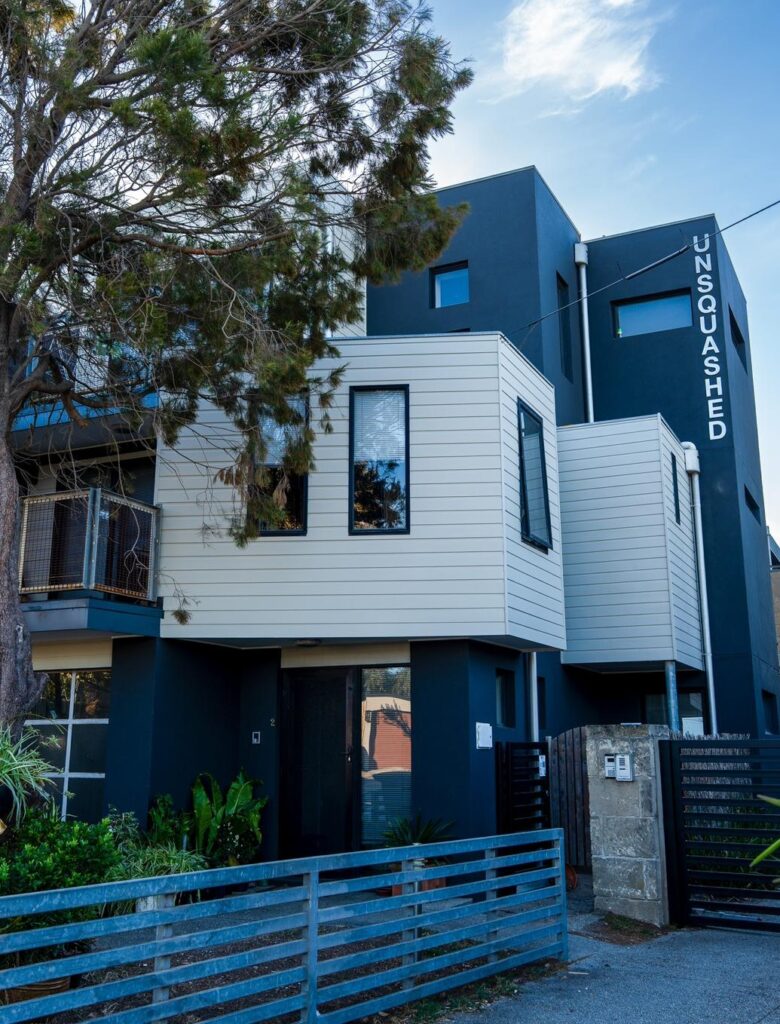
The first image in a listing is almost always the front elevation, and it is the one buyers decide on before they read anything.
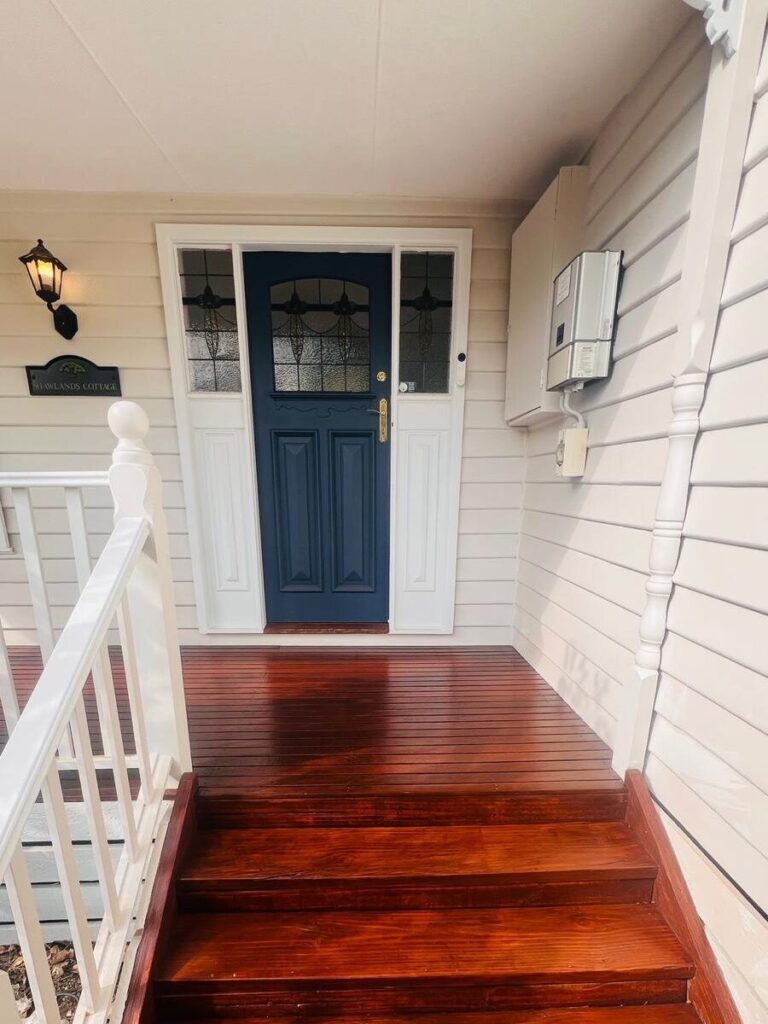
That makes a small list of items disproportionately important: the front door, the eaves and fascia, the porch ceiling, the fence and the letterbox. None of them is expensive on its own, and together they change the photograph more than repainting the whole house would.
If the fence is tired, it is worth doing. Our guide to fence painting covers the preparation, and for timber homes our notes on weatherboard painting cover what proper prep involves.
Neutral, but not sterile
Agents push neutral schemes for a reason that is about buyers rather than taste: a buyer has to be able to imagine their own furniture in the room, and a strong colour makes that work harder.
That does not mean flat builder white everywhere. Rooms painted dead white photograph cold and feel unfinished in person. A warm off-white on walls with a clean white ceiling and crisp trim reads as considered, photographs well, and does not commit the buyer to anything.
Keep it consistent through the connected spaces. Four different whites across a hallway, living room and kitchen is visible, and it looks like rooms painted at different times rather than a scheme.
Do not paint over a problem
This is worth saying plainly, because the temptation before a sale is real.
Painting over damp, salt deposits, active cracking or water damage does not hide it. Buyers get building inspections, inspectors know exactly where to look, and fresh paint in one isolated patch is itself a flag. A problem found by an inspector after you have covered it costs more in negotiation than the repair would have cost.
If there are white crystalline deposits or flaking at the base of a wall, that is moisture moving through the masonry and it needs addressing rather than coating. Our post on efflorescence explains what it indicates.
Sometimes a repaint is not needed at all
If the existing paint is sound and the colour is already neutral, a thorough clean plus making good the damage can get a house to photograph-ready for a fraction of a repaint.
We will tell you when that is the case. It is a smaller job for us and the right answer more often than people expect.
What we do for pre-sale work
- Interior repaints in neutral schemes, staged to a campaign date
- Front facade, entry, door and trim work
- Make-good: patching, water stains, corner damage, holes
- Fence, letterbox and external timber
- Clean and touch-up packages where a full repaint is not warranted
We are based in Richmond and work across Melbourne, the bayside suburbs, the Peninsula and the Surf Coast.
Call 0404 330 332 with your intended campaign date and we will work the schedule back from it.
📍 Our Service Areas Across Melbourne, the Mornington Peninsula, Surf Coast & Phillip Island
Melbourne & Bayside
- Expert Painting and Renovation in Richmond
- Expert Painting and Renovation in St Kilda
- Expert Painting and Renovation in South Yarra
- Expert Painting and Renovation in Malvern
- Expert Painting and Renovation in Hawthorn
- Expert Painting and Renovation in Kew
- Expert Painting and Renovation in Balwyn
- Expert Painting and Renovation in Mount Waverley
- Expert Painting and Renovation in Ringwood
- Expert Painting and Renovation in Doncaster
- Expert Painting and Renovation in Hampton
- Expert Painting and Renovation in Frankston
- Expert Painting and Renovation in Mount Eliza
- Expert Painting and Renovation in Mornington
- Expert Painting and Renovation in Mount Martha
- Expert Painting and Renovation in Rosebud
- Expert Painting and Renovation in Sorrento
Phillip Island & Bass Coast
- Expert Painting and Renovation in Flinders
- Expert Painting and Renovation in Somers
- Expert Painting and Renovation in San Remo
- Expert Painting and Renovation in Cape Woolamai
- Expert Painting and Renovation in Cowes
- Expert Painting and Renovation in Coronet Bay
- Expert Painting and Renovation in Tootgarook
- Expert Painting and Renovation in Rye
- Expert Painting and Renovation in Blairgowrie
- Expert Painting and Renovation in Portsea
- Expert Painting and Renovation in Inverloch
- Expert Painting and Renovation in Kilcunda
- Expert Painting and Renovation in Ventnor
- Expert Painting and Renovation in Newhaven
Surf Coast & Bellarine Peninsula
- Expert Painting and Renovation in Geelong
- Expert Painting and Renovation in Torquay
- Expert Painting and Renovation in Ocean Grove
- Expert Painting and Renovation in Barwon Heads
- Expert Painting and Renovation in Anglesea
- Expert Painting and Renovation in Lorne
- Expert Painting and Renovation in Apollo Bay