
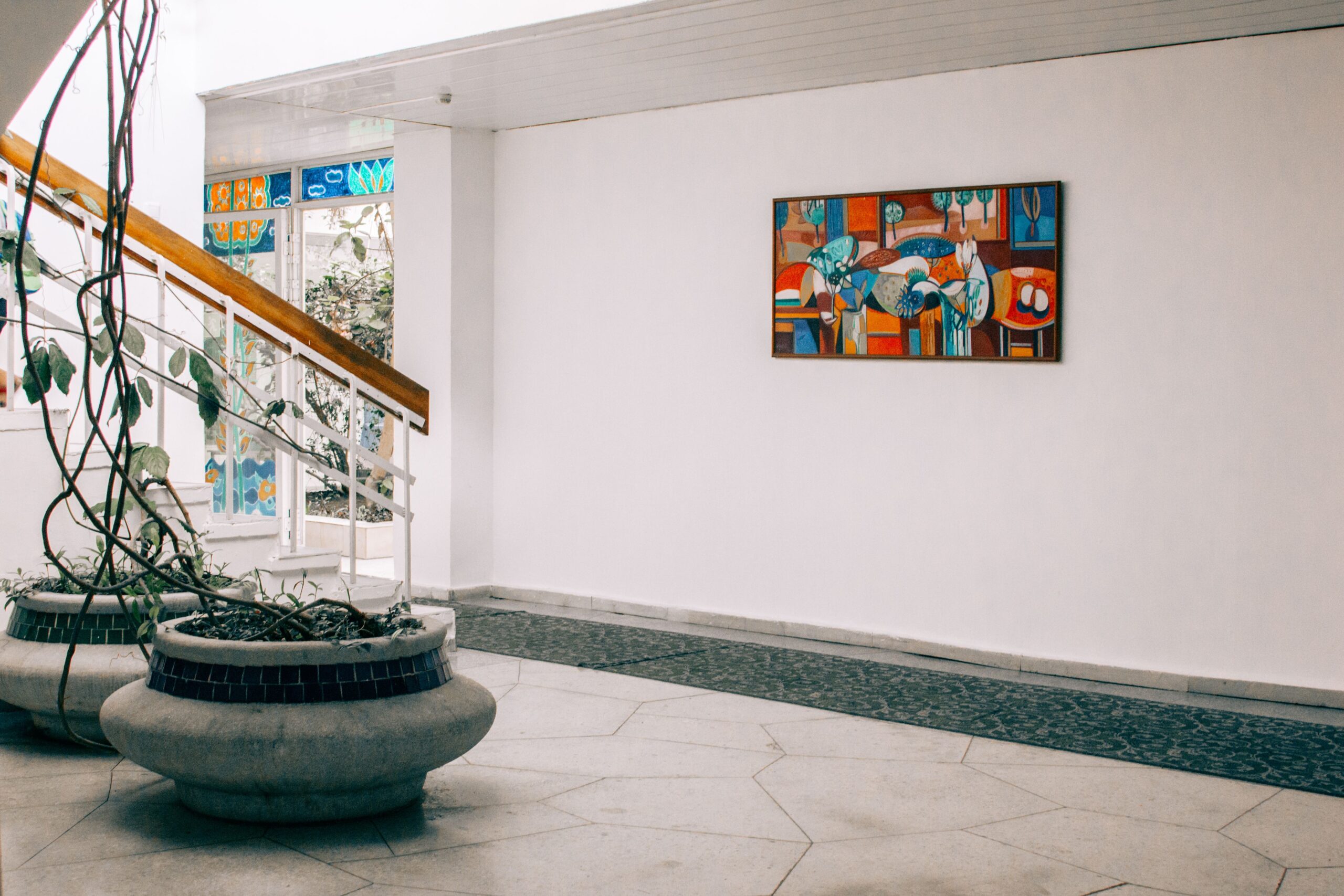
People move into a brand-new house, wipe a mark off the hallway six months later, and take the paint off with it. Then they wonder what the builder did wrong.
Usually nothing. Builder’s paint is a specification, not a mistake, and understanding what you actually received makes the decision about when to repaint much easier.
What builder’s white normally is
On a volume-built home the painting allowance is one of the tightest line items in the contract. What that typically buys is:
- A sealer coat over new plasterboard, then usually one topcoat rather than two
- A flat or matt finish, which hides surface imperfections cheaply but cannot be washed
- One colour throughout, walls and sometimes ceilings, to avoid cutting in
- A basic trim enamel, sometimes a single coat
- No allowance for the second coat that makes a finish durable
Flat paint over a single topcoat is why the hallway marks so easily and why wiping it burnishes a shiny patch instead of cleaning it. It is not a defect. It is the finish that was priced.
Do not repaint in the first year
This is the part worth being disciplined about, because repainting too early wastes the job.
A new house moves. The frame dries out, the slab settles and the structure goes through its first full Melbourne summer and winter. In the first twelve to twenty-four months you should expect:
- Hairline cracks where cornice meets the wall
- Cracking at the corners of door and window openings
- Nail pops and small bulges where fixings move
- Joints in plasterboard becoming faintly visible
- Gaps opening between skirting and the floor
Repaint at month three and you will be patching all of that at month eighteen anyway. Most of this movement settles down after the first year, and that is the point to do the work properly. Our guide to plaster cracks explains which ones are cosmetic and which are worth worrying about.
Use the defect liability period first
Your building contract will have a defect liability period, commonly twelve months from handover, during which the builder is responsible for rectifying defects.
Paint and plaster issues are among the most commonly claimed items, and the mistake is repainting over them before they are reported. Once you have repainted, the builder can reasonably argue the work is no longer theirs.
So the order is: document everything with photographs, report it in writing before the period expires, let the builder rectify, and repaint afterwards. Keep your own list rather than relying on the handover inspection.
Get the paint details at handover and keep them
Ask for, and file somewhere you will find again:
- Brand, product and sheen for walls, ceilings and trim
- The colour name and code for each
- Any leftover tins, labelled with the room
Without this, touching up a mark means guessing, and a guessed white almost never matches. Our notes on touching up paint cover why batch and sheen matter as much as colour.
What a proper repaint actually changes
When you do repaint, the gain is less about colour than about specification:
- A washable low-sheen on walls instead of flat, so marks come off rather than burnish
- Two full topcoats, which is where depth of colour and durability come from
- A proper enamel on trim and doors, which is what stops them yellowing and chipping
- Different colours between walls, trim and ceiling, which a builder’s scope rarely includes
- Attention to the surfaces the builder’s allowance skipped, such as the inside of the garage, the laundry and the robe interiors
That is a noticeably different house to live in, and it is the first repaint that does most of the work. Choosing the colour is its own problem, and our guide to choosing a white and the paint sheen guide are the two worth reading first.
If the plasterboard is still bare
Some owners take on painting in a new build themselves, or finish a section the contract left out. New plasterboard is not a surface you can simply topcoat: it needs a sealer first, because the paper and the jointing compound absorb completely differently and the joints will flash through otherwise. We cover the sequence in painting new plasterboard.
A note on knockdown-rebuilds and extensions
Where a new extension meets an older house, matching the existing paint is usually a false economy. The old paint has aged, and new paint mixed to the same code will not match it.
The better result is almost always to repaint the connected spaces through to a natural break so the join does not announce itself. It is more work, and it is the difference between an extension that reads as part of the house and one that reads as an addition.
What we do
- First repaints on new homes after the settlement period
- Patching and making good settlement cracking, nail pops and joint movement
- Upgrading walls to a washable low-sheen and trim to a proper enamel
- Painting out the areas a builder’s contract left bare
- Blending extensions into existing houses
We are based in Richmond and work across Melbourne, the bayside suburbs, the growth corridors and coastal Victoria.
Call 0404 330 332. If your house is under a year old, say so, and we will tell you honestly whether it is worth waiting.
📍 Our Service Areas Across Melbourne, the Mornington Peninsula, Surf Coast & Phillip Island
Melbourne & Bayside
- Expert Painting and Renovation in Richmond
- Expert Painting and Renovation in St Kilda
- Expert Painting and Renovation in South Yarra
- Expert Painting and Renovation in Malvern
- Expert Painting and Renovation in Hawthorn
- Expert Painting and Renovation in Kew
- Expert Painting and Renovation in Balwyn
- Expert Painting and Renovation in Mount Waverley
- Expert Painting and Renovation in Ringwood
- Expert Painting and Renovation in Doncaster
- Expert Painting and Renovation in Hampton
- Expert Painting and Renovation in Frankston
- Expert Painting and Renovation in Mount Eliza
- Expert Painting and Renovation in Mornington
- Expert Painting and Renovation in Mount Martha
- Expert Painting and Renovation in Rosebud
- Expert Painting and Renovation in Sorrento
Phillip Island & Bass Coast
- Expert Painting and Renovation in Flinders
- Expert Painting and Renovation in Somers
- Expert Painting and Renovation in San Remo
- Expert Painting and Renovation in Cape Woolamai
- Expert Painting and Renovation in Cowes
- Expert Painting and Renovation in Coronet Bay
- Expert Painting and Renovation in Tootgarook
- Expert Painting and Renovation in Rye
- Expert Painting and Renovation in Blairgowrie
- Expert Painting and Renovation in Portsea
- Expert Painting and Renovation in Inverloch
- Expert Painting and Renovation in Kilcunda
- Expert Painting and Renovation in Ventnor
- Expert Painting and Renovation in Newhaven
Surf Coast & Bellarine Peninsula
- Expert Painting and Renovation in Geelong
- Expert Painting and Renovation in Torquay
- Expert Painting and Renovation in Ocean Grove
- Expert Painting and Renovation in Barwon Heads
- Expert Painting and Renovation in Anglesea
- Expert Painting and Renovation in Lorne
- Expert Painting and Renovation in Apollo Bay