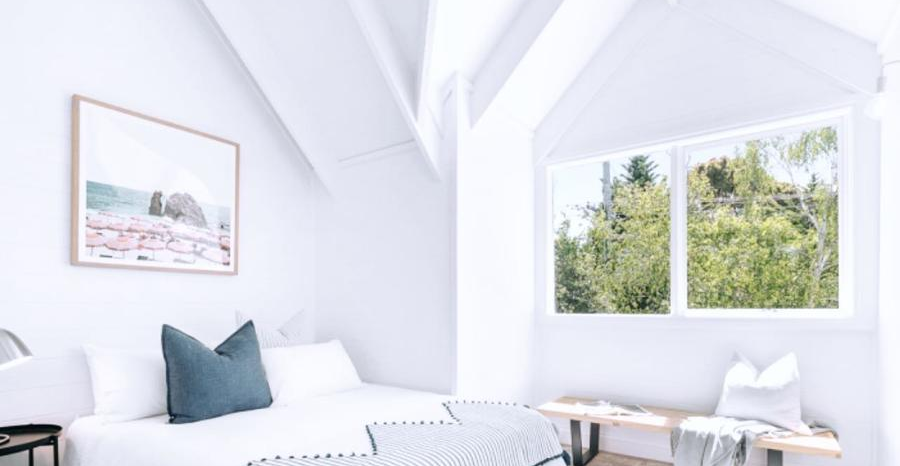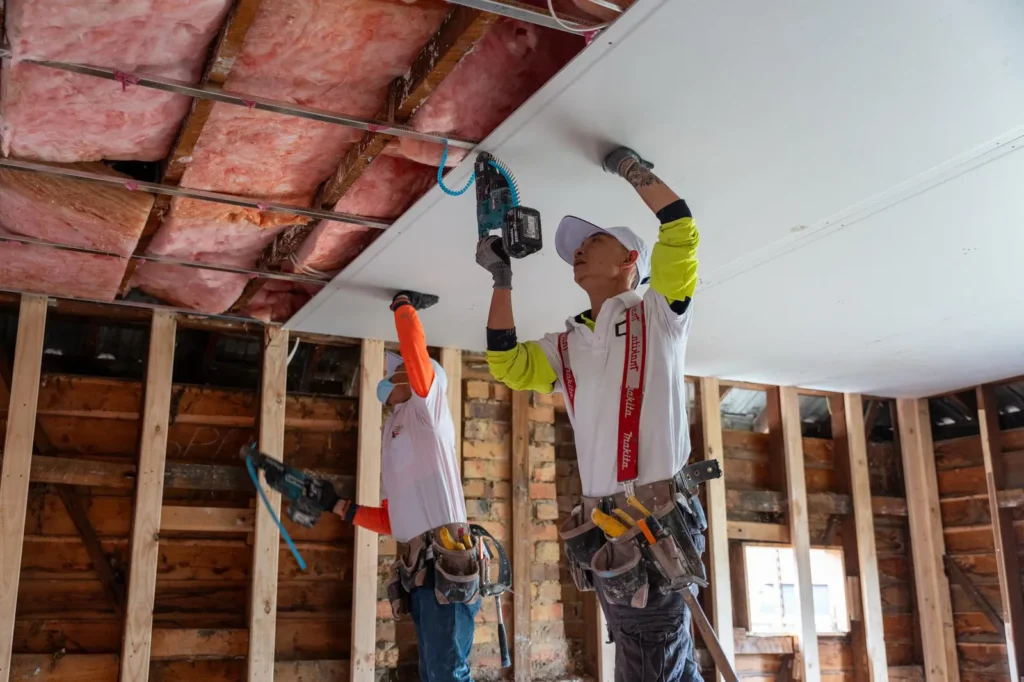

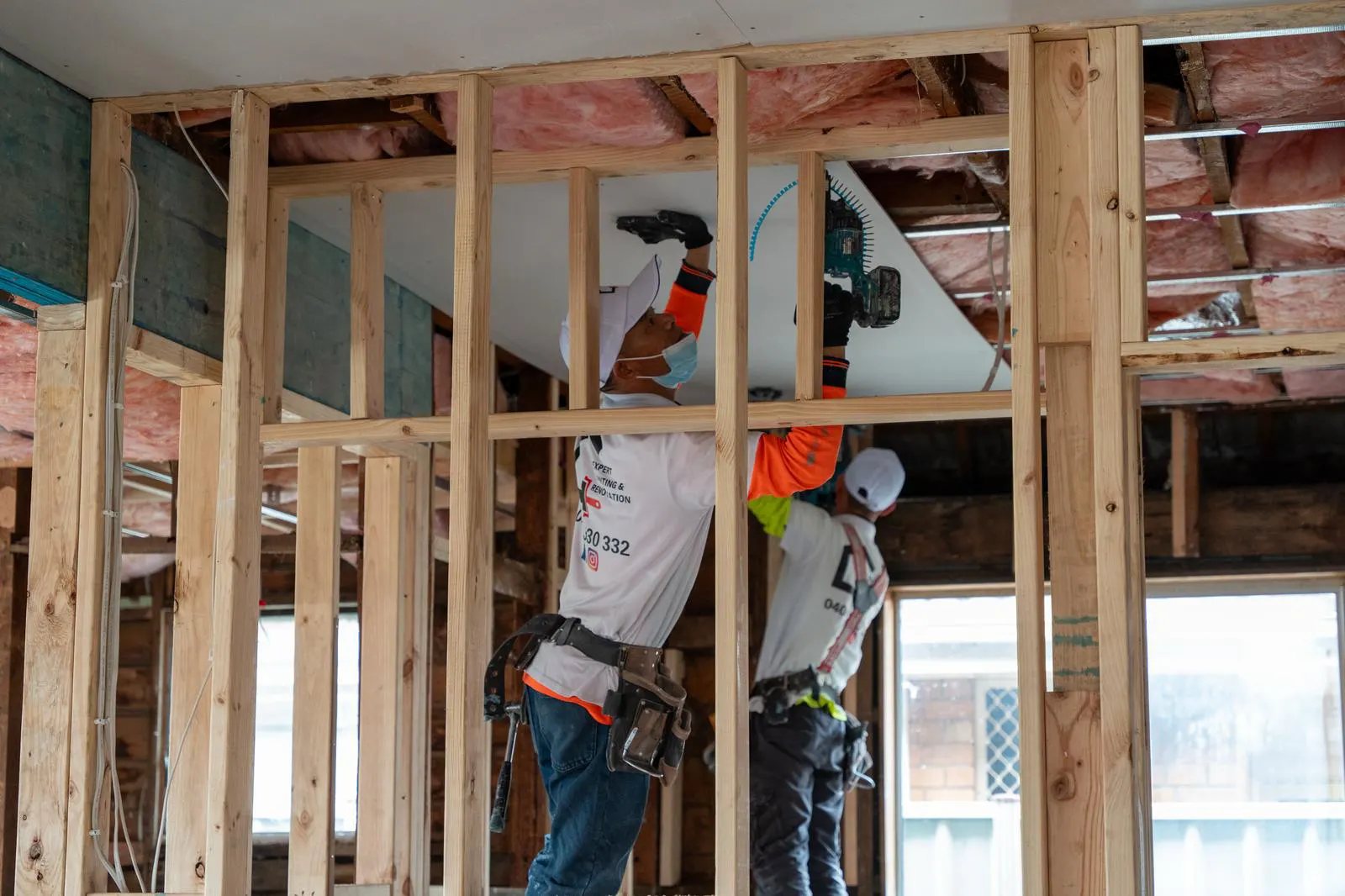
New plasterboard looks smooth and ready to paint, but it isn’t. Fresh plasterboard and the joint compound between sheets absorb paint very differently, and skipping the right first coat leaves you with patchy walls where every join and screw head shows through.
If you’re finishing a new build, an extension or a renovated room, here’s how new plasterboard should be painted.
Why new plasterboard needs special treatment
Plasterboard sheets and the compound used over joins and screw holes have different levels of porosity. Paint soaks into them at different rates, so a normal top coat dries unevenly. The result is called joint banding or photographing, where you can see every seam and fastener under the paint, especially in side light.
The right process
- Let everything dry. Joint compound must be completely dry before any painting starts.
- Sand the joints. Joins and screw holes are sanded smooth and flush with the sheet.
- Dust off thoroughly. Fine plaster dust stops paint bonding, so surfaces are wiped or vacuumed.
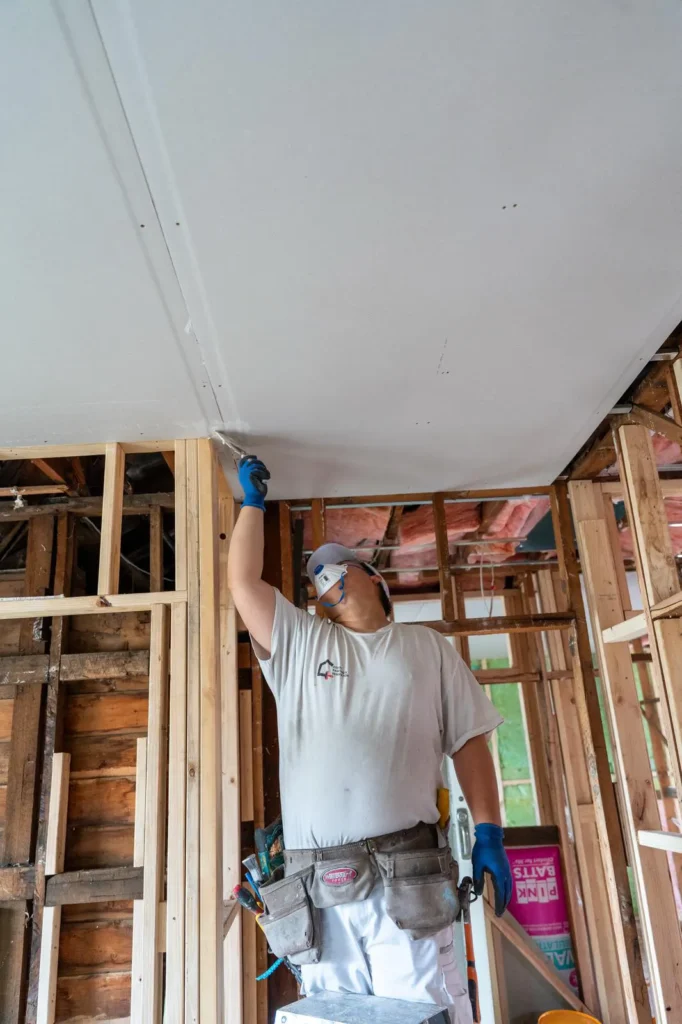
- Apply a plasterboard sealer. This is the critical step. A dedicated sealer or primer made for new plasterboard evens out porosity across sheets and compound.
- Check under light. Once sealed, imperfections become visible and can be filled and spot-sealed.
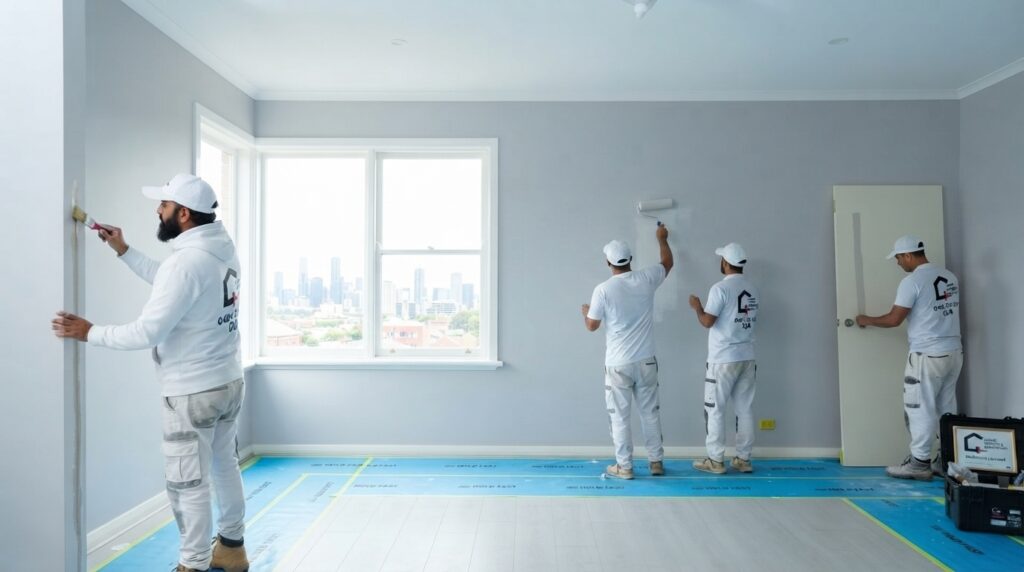
- Apply two top coats. Ceilings first, then walls, then trims and doors.
Sealer is not the same as undercoat
This catches a lot of people out. A general-purpose undercoat is designed to help paint stick to an existing painted surface. A plasterboard sealer is designed to soak into and seal a raw, absorbent surface. Using the wrong one on new plasterboard is one of the most common causes of patchy walls in new homes.
New build or extension: what else to consider
- Timing. Painting usually happens after the plaster is finished and before flooring and final fit-off, though the exact order depends on your builder.
- Ventilation. New builds can be damp inside. Good airflow helps paint cure properly.
- Temperature. Very cold or very hot conditions affect drying, so timing matters in Melbourne’s changeable weather.
- Trims and doors. Bare timber architraves, skirting boards and doors need their own primer before enamel.
- Touch-ups later. Other trades will mark walls during fit-off, so a touch-up visit at the end is normal.
Choosing colours for a new home
With blank walls and no existing scheme to work around, it’s worth testing samples in the actual rooms. Light changes dramatically between north and south-facing rooms, and a white that looks warm in a display home can look cold in yours. Test large swatches and look at them at different times of day.
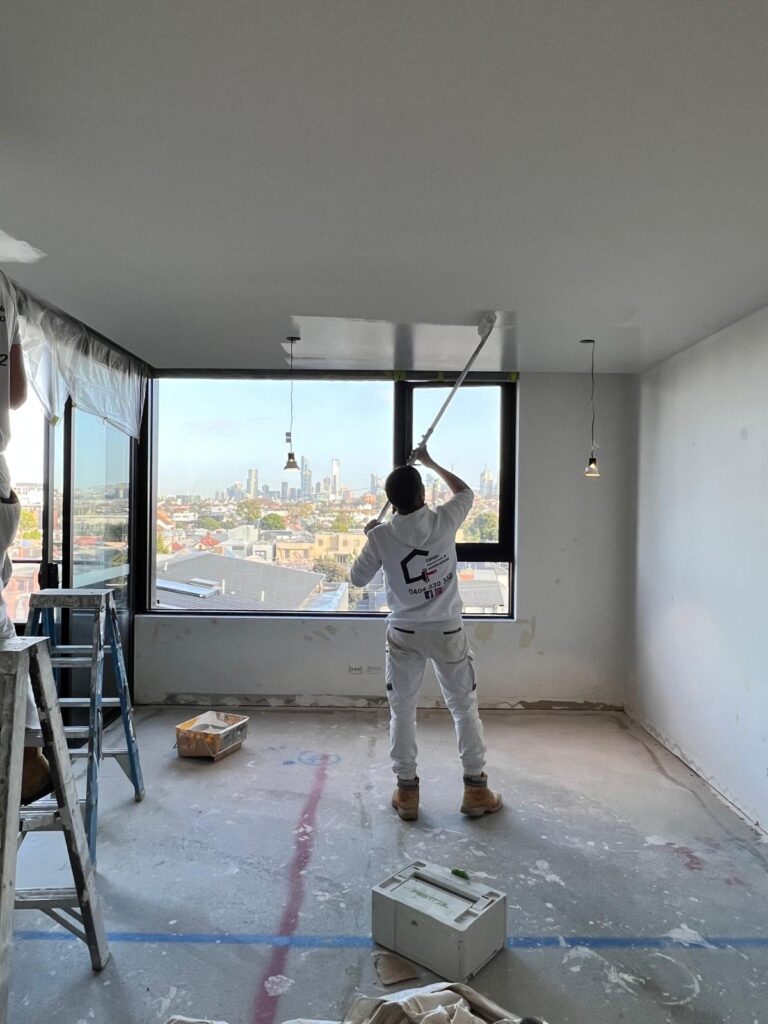
Ceilings, walls and trims
A typical new-build scheme uses a flat ceiling paint, a washable low sheen on the walls and a semi-gloss enamel on trims and doors. This combination hides ceiling imperfections, keeps walls easy to clean, and gives trims a crisp, hard-wearing finish.
Get it right the first time
Patchy walls in a brand-new home are frustrating and expensive to fix, because the wall usually needs re-sealing and repainting completely. Expert Painting and Renovation is a family-run, Aussie-local company based in Richmond, with more than 9 years of experience as Melbourne painters. We check what surfaces we’re working with before choosing products, so new plasterboard is sealed and finished properly.
Learn more about our interior painting and plastering services.
FAQ
Can I paint new plasterboard without a sealer?
You can, but you’ll usually see joins and screw heads through the paint. A plasterboard sealer is the step that prevents this.
How many coats does new plasterboard need?
Typically a sealer coat followed by two top coats.
Do I need to sand between coats?
A light sand after the sealer coat helps knock back any raised paper fibres and gives a smoother finish.
When should painting happen in a new build?
After plastering is complete and generally before flooring and final fit-off, though your builder will confirm the order.
Building or extending? Contact Expert Painting and Renovation for a quote.
Related guides
About Expert Painting & Renovation
Expert Painting and Renovation is an Aussie-local, family-run company based in Richmond, Melbourne, with more than 9 years of experience in residential and commercial painting and renovation. Our specialists deliver premium workmanship, timely service and durable finishes designed for Melbourne homes.
- Ceiling crack repairs
- Sagging ceiling restoration
- Water‑damaged ceiling repairs
- Cornice replacement
- Full plastering services
- Interior & exterior painting
- Weatherboard restoration
- Deck & timber maintenance
- Roof painting
- Rendering & texture coating
- Commercial Painting
- Plastering Services
- House Painting
Whether you need maintenance advice, a single-room refresh or a full home makeover, our team is just a call away.
📍 Our Service Areas Across Melbourne, the Mornington Peninsula, Surf Coast & Phillip Island
Melbourne & Bayside
- Expert Painting and Renovation in Richmond
- Expert Painting and Renovation in St Kilda
- Expert Painting and Renovation in South Yarra
- Expert Painting and Renovation in Malvern
- Expert Painting and Renovation in Hawthorn
- Expert Painting and Renovation in Kew
- Expert Painting and Renovation in Balwyn
- Expert Painting and Renovation in Mount Waverley
- Expert Painting and Renovation in Ringwood
- Expert Painting and Renovation in Doncaster
- Expert Painting and Renovation in Hampton
- Expert Painting and Renovation in Frankston
- Expert Painting and Renovation in Mount Eliza
- Expert Painting and Renovation in Mornington
- Expert Painting and Renovation in Mount Martha
- Expert Painting and Renovation in Rosebud
- Expert Painting and Renovation in Sorrento
Phillip Island & Bass Coast
- Expert Painting and Renovation in Flinders
- Expert Painting and Renovation in Somers
- Expert Painting and Renovation in San Remo
- Expert Painting and Renovation in Cape Woolamai
- Expert Painting and Renovation in Cowes
- Expert Painting and Renovation in Coronet Bay
- Expert Painting and Renovation in Tootgarook
- Expert Painting and Renovation in Rye
- Expert Painting and Renovation in Blairgowrie
- Expert Painting and Renovation in Portsea
- Expert Painting and Renovation in Inverloch
- Expert Painting and Renovation in Kilcunda
- Expert Painting and Renovation in Ventnor
- Expert Painting and Renovation in Newhaven
Surf Coast & Bellarine Peninsula
- Expert Painting and Renovation in Geelong
- Expert Painting and Renovation in Torquay
- Expert Painting and Renovation in Ocean Grove
- Expert Painting and Renovation in Barwon Heads
- Expert Painting and Renovation in Anglesea
- Expert Painting and Renovation in Lorne
- Expert Painting and Renovation in Apollo Bay