

Walk around almost any Melbourne house that was painted five years ago and one elevation will look noticeably worse than the rest. Nine times out of ten it is one of the west-facing walls, and the north-facing wall is usually second.
This is not bad paint or a bad painter. West-facing walls fail first for reasons that are built into where the sun is and what it does to a coating, and once you understand it you can plan maintenance around it instead of being surprised by it.
Why west-facing walls get hit hardest
In the southern hemisphere the sun tracks across the northern sky, so north-facing walls get the longest total exposure. But west-facing walls get the worst exposure, which is a different thing.
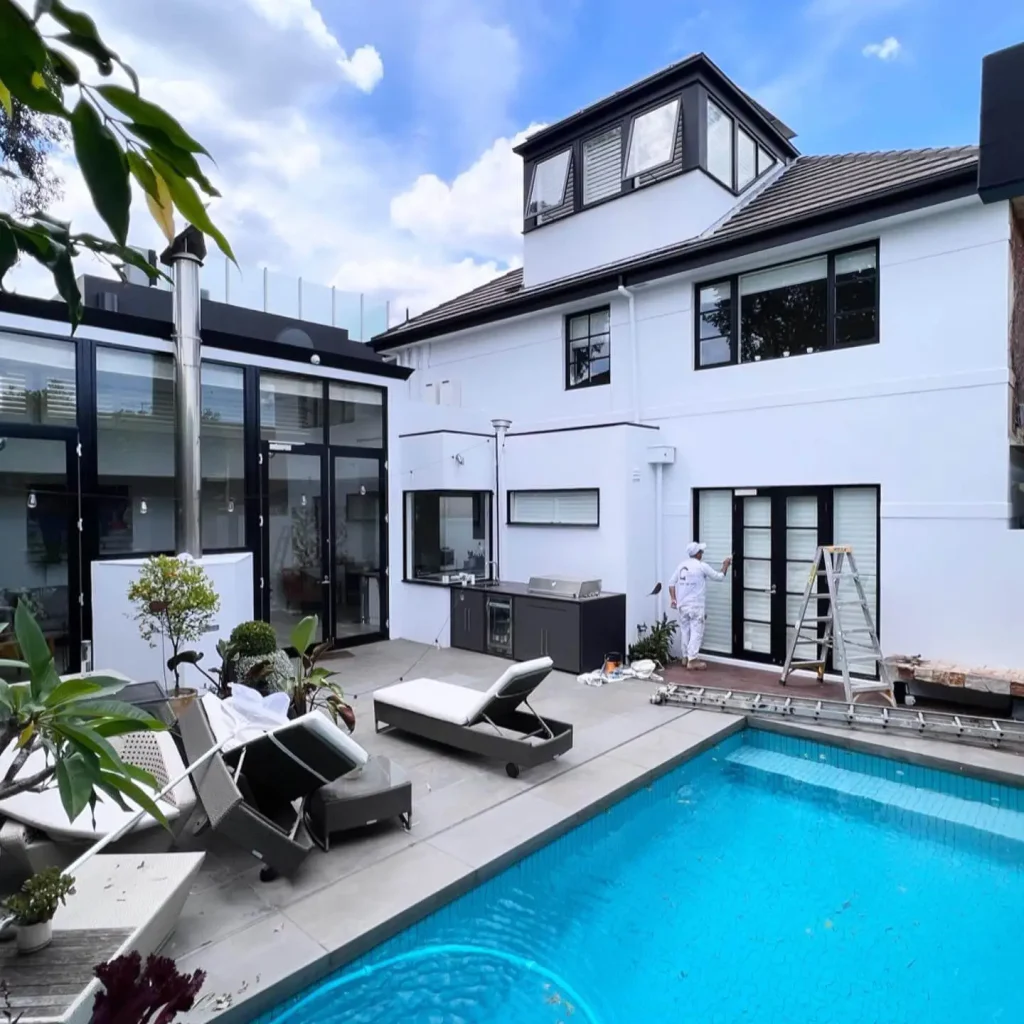
The afternoon sun arrives when the air temperature is already at its daily peak. A wall facing west in a Melbourne summer takes direct sun from roughly two in the afternoon until sunset, on top of a day that has already warmed it. Surface temperatures on a dark west wall can sit 20 to 30 degrees above air temperature, which means a 35 degree day puts that wall somewhere above 60.
North walls get more hours of light. West walls get the heat and the light together, and that combination is what breaks coatings down.
What UV actually does to paint
Paint is pigment held in a binder. The pigment provides colour and opacity; the binder is the resin that holds everything together and sticks it to the wall.
Ultraviolet light breaks the chemical bonds in that binder. As it degrades, it loses its grip on the pigment particles at the surface, and they begin to release. That is chalking — run your hand down a weathered wall and the powder that comes off is pigment that the binder can no longer hold.
The sequence is predictable. Gloss goes first, usually within a year or two on a bad elevation. Then the colour flattens and fades. Then the surface chalks. Then micro-cracking appears as the film loses flexibility, and finally it flakes, because a brittle film cannot follow the substrate as it moves.
If you can see the first two stages on one wall and not the others, you are looking at a maintenance decision rather than a failure.
Thermal movement is the second mechanism
Melbourne does something specific that makes this worse than the raw UV numbers suggest. The overnight drop is large — a 35 degree afternoon can be followed by a 15 degree night, and a cool change can take 15 degrees out of the air in under an hour.
That means a west wall expands hard through the afternoon and contracts fast in the evening, every day, through summer. The substrate moves and the paint film has to move with it. A fresh, flexible film handles that easily. A film that has been UV-degraded for four summers has lost its elasticity and starts to crack instead of stretch.
This is why timber and metal on a west elevation fail faster than masonry. They move more.
Colour matters more than people expect
Two things are going on with colour.
- Dark colours absorb more heat, so a charcoal west wall runs far hotter than a pale one and takes much more thermal stress. This is the main practical argument against very dark colours on a western elevation.
- Some pigments are inherently less lightfast. Organic pigments used for strong reds, bright yellows and some vivid blues fade considerably faster than the inorganic oxides used in earth tones and greys. A deep red west wall can visibly shift within a few years while the same paint on the south side stays put.
If you want a dark or saturated colour, the south and east elevations will hold it far longer than the west.
The practical consequence: stop repainting the whole house
Here is the part that saves money.
Most people repaint everything at once, on a cycle set by whichever elevation looks worst. That means the south wall, which might have another five years in it, gets repainted at the same time as the west wall that genuinely needed it.
The alternative is to treat the west and north elevations as being on a shorter cycle than the rest. Recoating one or two elevations costs a fraction of a full exterior, the access is often simpler, and it keeps the protective film intact on the walls that are actually under attack. The south and east elevations then get done on a longer interval.
This works best if you plan for it from the start: keep the batch and colour records, and expect the exposed sides to come around sooner.
Specifying for west-facing walls
- Use the better product on the west and north, even if you economise elsewhere. The difference between a mid-range and a premium exterior acrylic shows up on those walls first.
- Consider an extra coat on the exposed elevations rather than the same film build all round.
- Prime properly. UV damage accelerates once water gets in behind a failing film, and most of that starts at unsealed end grain and joints.
- Lighter is better on the hot sides. If you want contrast, put the dark colour on the trim rather than the broad wall area.
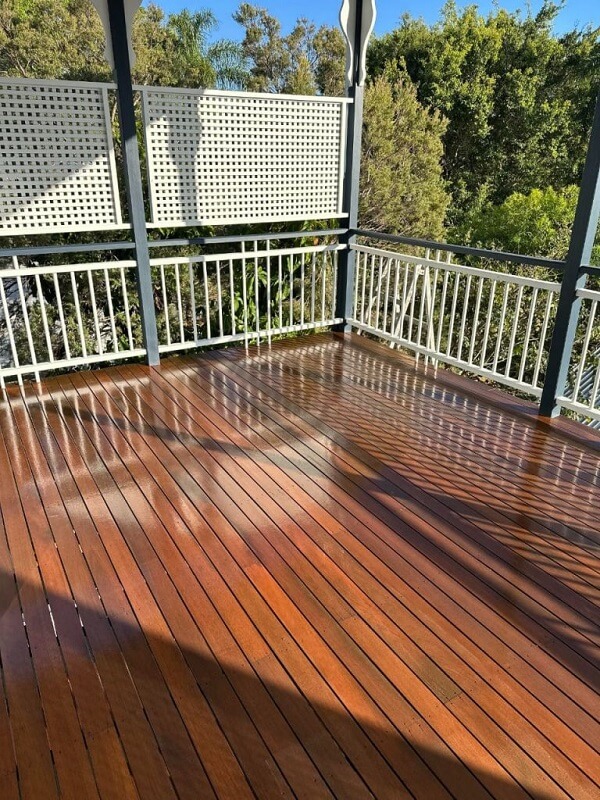
- On timber, keep an eye on the lower boards, where heat from above meets moisture from below.
Melbourne specifics
Bayside and Peninsula properties get UV plus salt, and the two work together — salt crystals in a weathering film accelerate breakdown. Those west-facing walls looking out over the water are the hardest-worked surfaces we deal with.
Inner-suburban terraces have the opposite problem: many have little or no eave overhang, so there is no shading at all on the upper wall. A house in Richmond or Collingwood with a parapet and no eaves takes full sun on the render from mid-afternoon.
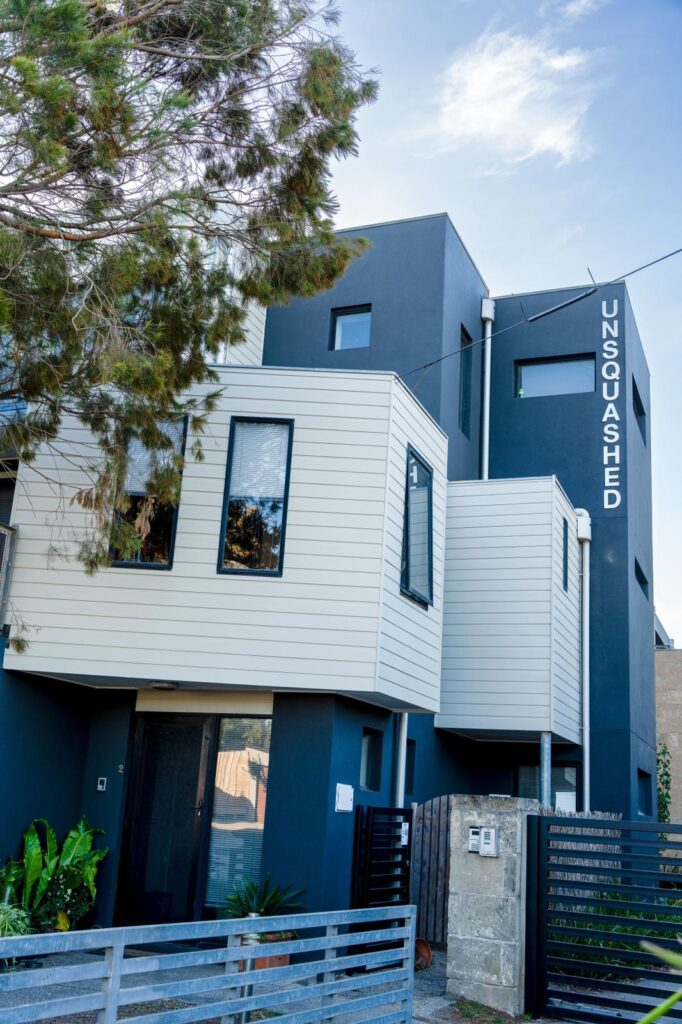
And in the newer estates out west and north, two-storey homes with large unbroken wall areas and dark colour schemes are the fastest-fading houses in the city.
When to look
Check west-facing walls every couple of years, not the front of the house. Rub your hand across it. If you get chalk on your palm, the binder is going and you are on borrowed time — recoating now is a wash and two coats, whereas waiting until it flakes means stripping back.
Fading on its own is cosmetic. Chalking is the signal that the film is no longer protecting what is underneath.
Get the exposed sides assessed
We look at each elevation separately and tell you which ones genuinely need doing now and which can wait. If one side of your house looks older than the rest, call 0404 330 332 and we will give you a straight answer on it.
📍 Our Service Areas Across Melbourne, the Mornington Peninsula, Surf Coast & Phillip Island
Melbourne & Bayside
- Expert Painting and Renovation in Richmond
- Expert Painting and Renovation in St Kilda
- Expert Painting and Renovation in South Yarra
- Expert Painting and Renovation in Malvern
- Expert Painting and Renovation in Hawthorn
- Expert Painting and Renovation in Kew
- Expert Painting and Renovation in Balwyn
- Expert Painting and Renovation in Mount Waverley
- Expert Painting and Renovation in Ringwood
- Expert Painting and Renovation in Doncaster
- Expert Painting and Renovation in Hampton
- Expert Painting and Renovation in Frankston
- Expert Painting and Renovation in Mount Eliza
- Expert Painting and Renovation in Mornington
- Expert Painting and Renovation in Mount Martha
- Expert Painting and Renovation in Rosebud
- Expert Painting and Renovation in Sorrento
Phillip Island & Bass Coast
- Expert Painting and Renovation in Flinders
- Expert Painting and Renovation in Somers
- Expert Painting and Renovation in San Remo
- Expert Painting and Renovation in Cape Woolamai
- Expert Painting and Renovation in Cowes
- Expert Painting and Renovation in Coronet Bay
- Expert Painting and Renovation in Tootgarook
- Expert Painting and Renovation in Rye
- Expert Painting and Renovation in Blairgowrie
- Expert Painting and Renovation in Portsea
- Expert Painting and Renovation in Inverloch
- Expert Painting and Renovation in Kilcunda
- Expert Painting and Renovation in Ventnor
- Expert Painting and Renovation in Newhaven
Surf Coast & Bellarine Peninsula
- Expert Painting and Renovation in Geelong
- Expert Painting and Renovation in Torquay
- Expert Painting and Renovation in Ocean Grove
- Expert Painting and Renovation in Barwon Heads
- Expert Painting and Renovation in Anglesea
- Expert Painting and Renovation in Lorne
- Expert Painting and Renovation in Apollo Bay