

Caulking and gap filling is the part of a paint job nobody photographs and everybody notices when it has not been done. It is also where a large slice of the preparation labour goes, which is why two quotes for the same house can differ so sharply.
Here is what it involves, where it belongs, and the places it should never be used.
What caulk is actually for
Caulk is a flexible sealant that bridges a joint between two surfaces that move independently. It is not a filler and it is not a glue.
It does three things. It keeps water out of junctions where two materials meet. It stays flexible so the joint can open and close seasonally without the paint cracking along the line. And it gives you a crisp, continuous edge where two planes meet, which is most of why a professional interior looks sharper than a DIY one.
That flexibility is the key difference. A joint between an architrave and a wall will open and close by a millimetre or two through the year. Fill it with a rigid filler and the first dry spell cracks it. Caulk stretches.
Caulk, filler, putty and foam are four different products
They get used interchangeably on site by people who should know better, and the results are predictable.
- Caulk, usually acrylic gap sealant: flexible joints between different surfaces. Paintable. Shrinks slightly.
- Filler, including powder and ready-mixed: holes, dents, nail pops and chips in a single rigid surface. Sands flat. Cracks if it is used in a moving joint.
- Putty, usually linseed-based glazing putty: bedding glass into timber sashes. Long curing time before painting.
- Expanding foam: filling large voids behind the finished surface, never as a visible sealant. It has no UV resistance and does not take paint well.
Using filler where caulk belongs is the single most common preparation error, and you can see it on any house where there is a hairline crack running the full length of every architrave.
Where caulking and gap filling belongs
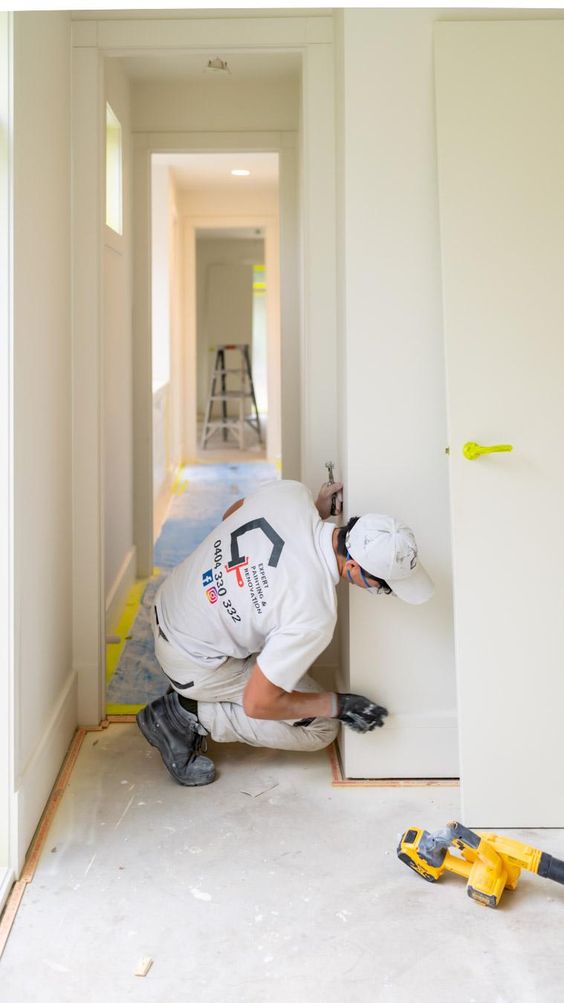
- The joint where architraves and skirtings meet the wall.
- Mitres and joints in trim, especially where two lengths of skirting meet.
- Where a cornice meets the wall, if the line is already cracked.
- Around window and door frames, inside and out, where the frame meets render or brickwork.
- Weatherboard ends where they butt into corner boards or stop ends.
- Around penetrations — taps, vents, light fittings, meter boxes, pipe entries.
- Between a timber sill and the wall below it.
Where it does not belong, and this matters
This is the part that causes real damage, because sealing the wrong gap traps water instead of excluding it.
- Weep holes in brickwork. The small open vertical joints at the base of a brick wall and above windows are drainage. Sealing them is actively harmful and causes damp inside.
- The drip groove or open edge under a window sill. That gap is designed to let water run off and drip clear.
- Eave and soffit vents. These ventilate the roof space. Sealing them creates condensation problems.
- Over a structural or movement crack. If a crack is opening and closing seasonally, caulk will be torn apart within a year. That needs diagnosing and treating properly, not hiding.
- Along the bottom edge of weatherboards where they lap. That overlap needs to breathe.
A good rule: if the gap exists so water or air can get out, leave it alone.
Silicone is the trap
Pure silicone sealant cannot be painted. Paint will not bond to it, and it will bead up and peel off in strips.
This causes a specific and very common failure. Someone seals around a bath, a window or a skirting with a bathroom silicone, then the painter arrives and paints over it. Weeks later there is a ragged line of peeling paint following every bead.
If silicone is already there it has to be cut out and replaced with a paintable sealant, which is slow work. The products you want say paintable on the cartridge — generally acrylic gap sealants or modified hybrids. Worth checking before anyone picks up a gun.
Doing it properly
The bead has to be tooled, not just run and left. A smeared bead sits proud, collects dust and reads as a lumpy line under paint.
Depth matters as much as width. A joint filled too deeply bonds on three sides and cannot stretch, so it tears. Deep gaps get backing rod pushed in first so the sealant only bonds to the two faces that move.
Large gaps are not a caulking job at all. Past about 10 millimetres you are looking at a carpentry problem — a packer, a new piece of trim, or a board that has moved and needs refixing. Filling a 20 millimetre gap with sealant produces a sagging rubbery line that fails quickly.
And it goes on after priming on bare surfaces, not before. Sealant bonds better to a primed surface, and priming first stops raw timber sucking the moisture out of the bead.
Why old caulk has to come out
Acrylic sealants have a service life. After eight or ten years, particularly on an exterior, they go hard, shrink back and split away from one face of the joint.
Painting over perished caulk gets you a new paint film sitting on a failed seal. It looks fine for a season and then the line opens up again, usually in the first cold snap, and water starts getting into the joint behind it.
On a repaint, raking out and replacing the perished beads is part of the job. If a quote does not mention it on a house that was last painted a decade ago, ask.
The Melbourne angle
Melbourne sits on reactive clay soils through large parts of the east and south-east. Those soils swell in winter and shrink in summer, and houses move with them — which is why the cornice line and the architrave joints open up seasonally here more than in many other cities.
That seasonal movement is exactly what caulking and gap filling is designed to absorb. It is also why a rigid filler in those joints fails so reliably, and why cracks that keep returning in the same place every summer are telling you something structural rather than cosmetic.
Weatherboard homes move for a different reason — timber takes up and gives off moisture with humidity — and the joints at board ends and corner boards need flexible sealant for the same reason.
What this looks like on a quote
A quote that lists preparation as one word is not pricing this. A quote that specifies raking out perished sealant, replacing beads around frames and trim, and the product being used, is pricing a job that will still look right in five years.
It is slow work and it is most of the difference between a cheap quote and a thorough one.
Ask us what your place needs
We go through the joints before we quote and tell you what has to come out and what can stay. Call 0404 330 332 and we will take a look.
📍 Our Service Areas Across Melbourne, the Mornington Peninsula, Surf Coast & Phillip Island
Melbourne & Bayside
- Expert Painting and Renovation in Richmond
- Expert Painting and Renovation in St Kilda
- Expert Painting and Renovation in South Yarra
- Expert Painting and Renovation in Malvern
- Expert Painting and Renovation in Hawthorn
- Expert Painting and Renovation in Kew
- Expert Painting and Renovation in Balwyn
- Expert Painting and Renovation in Mount Waverley
- Expert Painting and Renovation in Ringwood
- Expert Painting and Renovation in Doncaster
- Expert Painting and Renovation in Hampton
- Expert Painting and Renovation in Frankston
- Expert Painting and Renovation in Mount Eliza
- Expert Painting and Renovation in Mornington
- Expert Painting and Renovation in Mount Martha
- Expert Painting and Renovation in Rosebud
- Expert Painting and Renovation in Sorrento
Phillip Island & Bass Coast
- Expert Painting and Renovation in Flinders
- Expert Painting and Renovation in Somers
- Expert Painting and Renovation in San Remo
- Expert Painting and Renovation in Cape Woolamai
- Expert Painting and Renovation in Cowes
- Expert Painting and Renovation in Coronet Bay
- Expert Painting and Renovation in Tootgarook
- Expert Painting and Renovation in Rye
- Expert Painting and Renovation in Blairgowrie
- Expert Painting and Renovation in Portsea
- Expert Painting and Renovation in Inverloch
- Expert Painting and Renovation in Kilcunda
- Expert Painting and Renovation in Ventnor
- Expert Painting and Renovation in Newhaven
Surf Coast & Bellarine Peninsula
- Expert Painting and Renovation in Geelong
- Expert Painting and Renovation in Torquay
- Expert Painting and Renovation in Ocean Grove
- Expert Painting and Renovation in Barwon Heads
- Expert Painting and Renovation in Anglesea
- Expert Painting and Renovation in Lorne
- Expert Painting and Renovation in Apollo Bay