
There is a point where patching a sheet stops being the cheaper option. People usually pass it two or three repairs before they notice.
Here is how to tell which side of that line you are on.
Before you take anything out: check the age of the house
If the building is pre-1990, the lining may be asbestos cement sheet rather than plasterboard, particularly in bathrooms, laundries, kitchens, eaves and older outbuildings.
Intact sheeting that stays in place and gets painted is one thing. Removing it is another entirely, and it is not work to start before you know what it is. Our guide to asbestos in older Melbourne homes covers testing and the Victorian rules on removal.
Never break, cut or pull down old sheeting on a hunch. Find out first.
Signs the sheet is past repairing
- It sags. A ceiling with a visible dip has either failed fixings, moisture, or both. On an old ceiling this is a safety matter, not a cosmetic one
- The paper face is gone. Plasterboard gets its strength from the paper. Once that is torn away or has rotted, the gypsum core behind it crumbles and nothing will hold in it
- It is soft. Press it. If it gives, it has taken water and the core is compromised
- Mould has grown into it. Surface mould on paint is treatable. Mould through the sheet is not
- There is more patch than original. Each repair has a slightly different porosity and texture. Past a certain density the wall will never look flat under paint
- The same joint keeps opening. That is movement, and filling it again will not change that
- The damage is bigger than a hand span. Small holes patch invisibly. Large ones usually want a cut-in section at minimum
Ceilings fail more often than walls
Gravity, roof leaks and decades of fixings working loose all act on ceilings and not on walls. A ceiling also has nothing holding it up except those fixings.
In older Melbourne homes a sagging ceiling deserves immediate attention rather than monitoring. Ceilings do come down, usually at night, usually all at once.
If the cause was a leak, the order matters and the plaster is the last step. See water damage repaints.
Lath and plaster is a different thing again
Plenty of pre-war Melbourne houses are not lined with plasterboard at all. They have lath and plaster: timber laths with wet plaster pushed through to form keys behind them.
It fails differently. The keys snap off over time and the plaster detaches from the laths while still looking intact from below, which is why an old ceiling can sound hollow across a whole section. Tapping tells you more than looking.
Repairing lath and plaster is specialist work, and over a large detached area the usual answer is replacement. If the room has original cornice or a ceiling rose worth keeping, that changes the approach considerably: see ceiling roses and decorative plaster.
For telling which construction you have, our guide to solid plaster versus plasterboard goes through it.
Over-sheeting: the middle option
Rather than removing the old lining, new board is fixed straight over the top of it.
It works well when the existing surface is sound but ugly, and it has real advantages: no demolition, far less dust and waste, and nothing disturbed that you would rather not disturb.
The trade-offs are worth understanding:
- The surface moves forward by the thickness of the new sheet, so architraves, skirtings, switches and power points all sit proud and may need packing out
- Cornice has to be removed and replaced
- It adds weight, which matters on a ceiling with questionable fixings
- It hides whatever is underneath rather than resolving it
For a wall with bad texture or a hundred patches it is often the sensible call. For a sagging ceiling it is the wrong call, because you are adding load to something already failing.
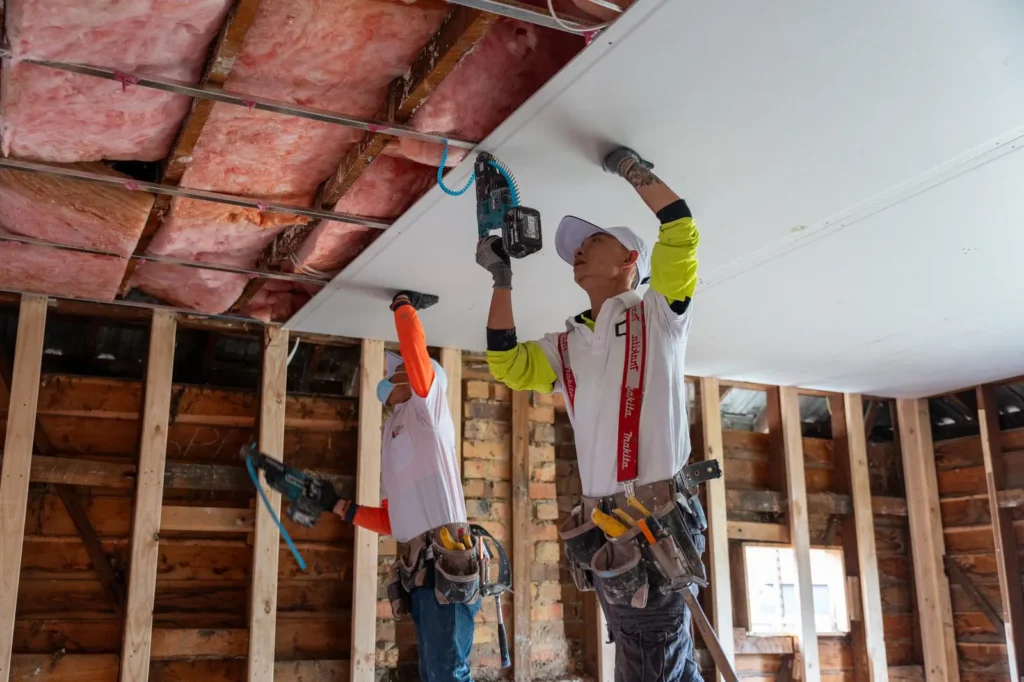
What replacement actually involves
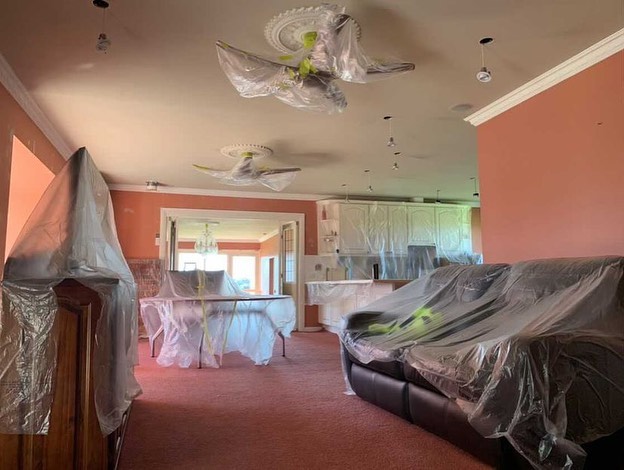
- Protection and containment, because removal is the dustiest work in the trade
- Removal and disposal of the old lining
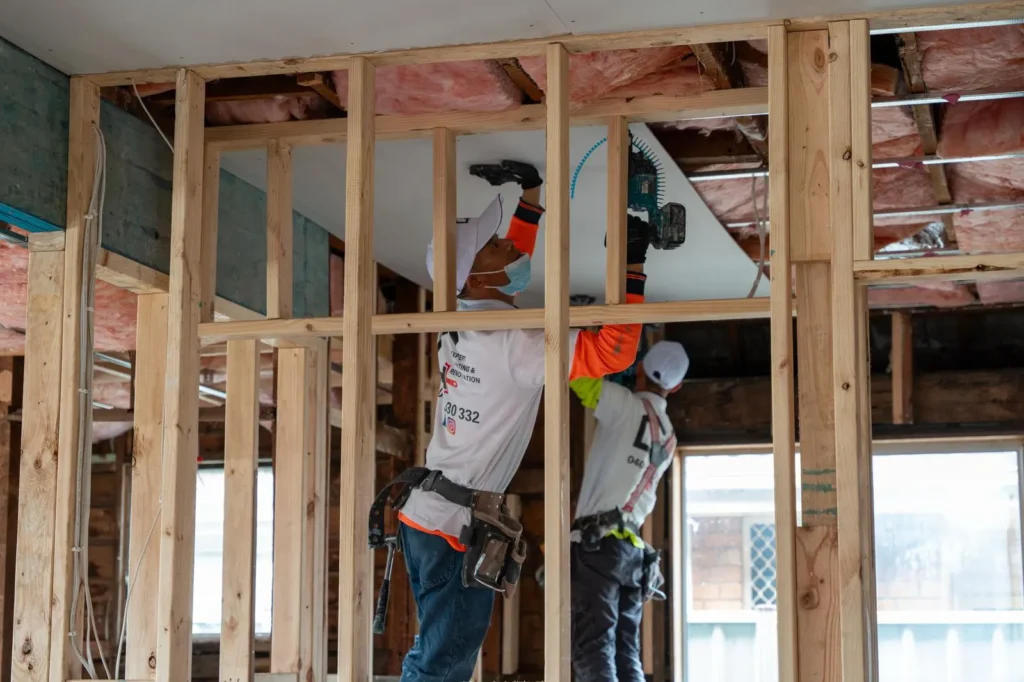
- Inspection of what is behind it, which is the moment to deal with wiring, insulation or damaged framing
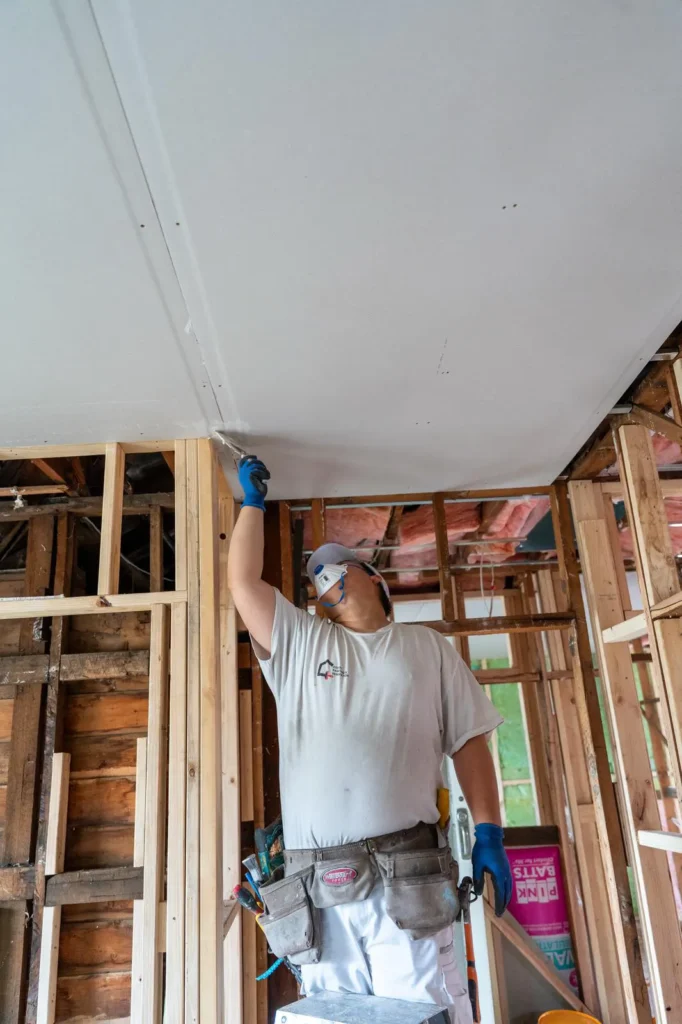
- New sheet, fixed and set, usually three coats of compound with sanding between
- Cornice refitted or replaced
- Sealing and painting
That open-wall moment is worth planning for. Running a new power point or adding insulation while the framing is exposed costs a fraction of doing it later.
Why replacing can be cheaper than repairing
The arithmetic that convinces people:
A repair is rarely a single visit. Compound needs drying time between coats, so even a modest patch is two or three attendances. Do that four times over six years and you have paid four lots of setup, four lots of travel, four lots of protection, and you still have a wall that shows every repair under raking light.
Replacing the sheet is one job, one lot of setup, and a surface that takes paint uniformly afterwards. Our notes on plastering cost go through why attendance dominates small jobs.
If the wall is sound but uneven, the third option is skimming rather than replacing. That is covered in skim coating walls.
What we do
- Assess whether a sheet should be patched, over-sheeted or replaced before quoting
- Flag likely asbestos sheeting in pre-1990 buildings rather than opening it up
- Ceiling and wall replacement, including lath and plaster removal
- Cornice refitting, including matching period profiles
- Plastering and painting handled together so the finish is right for the paint going on it
We are based in Richmond and work across Melbourne, the bayside suburbs and coastal Victoria.
Call 0404 330 332. If a ceiling is sagging, say so when you ring and we will look at it sooner rather than later.
Related reading
- Plastering cost in Melbourne
- Skim coating walls
- Ceiling roses and decorative plaster
- Restoring interior timber
- Plaster cracks
📍 Our Service Areas Across Melbourne, the Mornington Peninsula, Surf Coast & Phillip Island
Melbourne & Bayside
- Expert Painting and Renovation in Richmond
- Expert Painting and Renovation in St Kilda
- Expert Painting and Renovation in South Yarra
- Expert Painting and Renovation in Malvern
- Expert Painting and Renovation in Hawthorn
- Expert Painting and Renovation in Kew
- Expert Painting and Renovation in Balwyn
- Expert Painting and Renovation in Mount Waverley
- Expert Painting and Renovation in Ringwood
- Expert Painting and Renovation in Doncaster
- Expert Painting and Renovation in Hampton
- Expert Painting and Renovation in Frankston
- Expert Painting and Renovation in Mount Eliza
- Expert Painting and Renovation in Mornington
- Expert Painting and Renovation in Mount Martha
- Expert Painting and Renovation in Rosebud
- Expert Painting and Renovation in Sorrento
Phillip Island & Bass Coast
- Expert Painting and Renovation in Flinders
- Expert Painting and Renovation in Somers
- Expert Painting and Renovation in San Remo
- Expert Painting and Renovation in Cape Woolamai
- Expert Painting and Renovation in Cowes
- Expert Painting and Renovation in Coronet Bay
- Expert Painting and Renovation in Tootgarook
- Expert Painting and Renovation in Rye
- Expert Painting and Renovation in Blairgowrie
- Expert Painting and Renovation in Portsea
- Expert Painting and Renovation in Inverloch
- Expert Painting and Renovation in Kilcunda
- Expert Painting and Renovation in Ventnor
- Expert Painting and Renovation in Newhaven
Surf Coast & Bellarine Peninsula
- Expert Painting and Renovation in Geelong
- Expert Painting and Renovation in Torquay
- Expert Painting and Renovation in Ocean Grove
- Expert Painting and Renovation in Barwon Heads
- Expert Painting and Renovation in Anglesea
- Expert Painting and Renovation in Lorne
- Expert Painting and Renovation in Apollo Bay