
Plaster or render comes up constantly, usually because both words describe a wet material trowelled onto a wall, and people use them interchangeably. Tradespeople do not, and the distinction decides what goes on your wall, what it costs and how long before it can be painted.
The short version: plaster goes inside, render goes outside. The longer version has a few genuinely grey areas worth knowing about.
Plaster is an interior finish
Plaster in a modern Australian house usually means one of two things. Either plasterboard sheeting fixed to the frame and then set at the joints, or a skim coat applied over an existing surface to flatten it out.
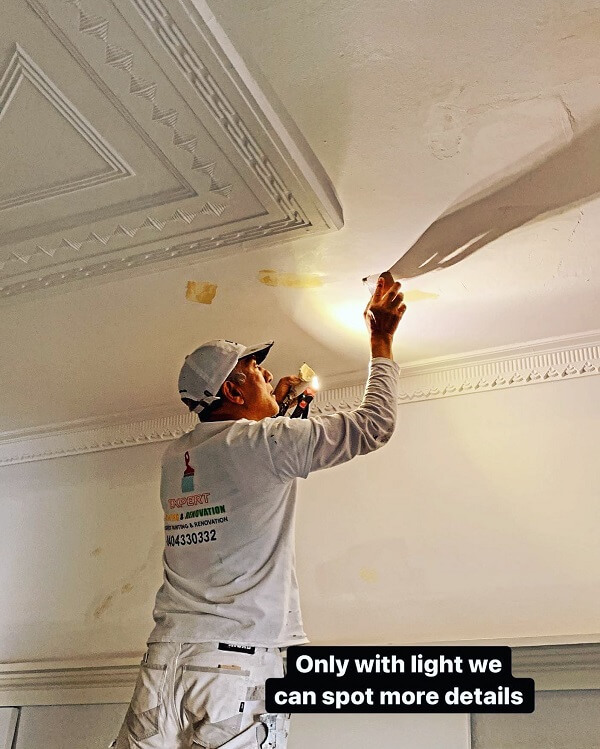
In older Melbourne homes it can also mean solid plaster — a cement or lime-based render applied directly to masonry walls internally, then finished smooth. It looks like plasterboard once painted but behaves completely differently.
What all interior plaster has in common is that it is formulated for a dry, stable environment. It is designed to be flat, smooth and ready for paint, not to keep weather out. Gypsum-based plaster exposed to repeated wetting falls apart.
Render is an exterior system
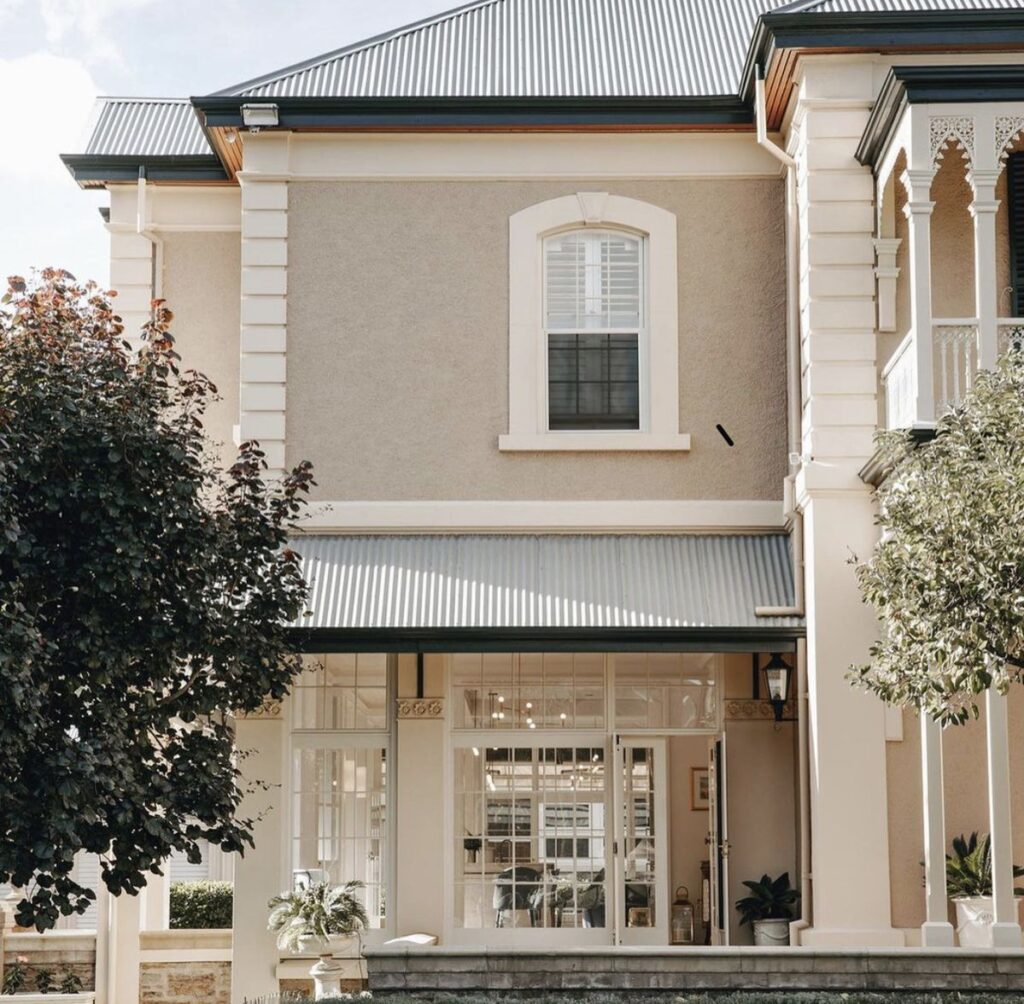
Render is cement and sand, or an acrylic-modified equivalent, applied to external masonry. Its job is to weatherproof the wall, give it a durable surface, and provide the texture and finish you see from the street.
The main types behave differently. Traditional cement render is a sand-and-cement base coat that then needs painting. Acrylic render is more flexible, more water-resistant and usually coloured through, so no separate paint step. Texture coats are a finish layer applied over a base, tinted and patterned.
Render has to handle UV, rain, frost and thermal movement. That is why it is coarser, harder, and considerably more expensive per square metre than internal plaster.
The decision is usually simple
Two questions answer it most of the time.
- Is the wall internal or external? Internal means plaster. External means render.
- Is the wall masonry or framed? Framed walls get plasterboard. Masonry walls can be rendered, or lined and plastered.
That covers the large majority of jobs. A plasterer and a renderer are often different trades with different tools and different materials, which is why asking for plaster or render specifically matters when you call someone.
The grey areas
- Garages and sheds. Often rendered internally rather than plastered, because the environment is unheated, damp-prone and takes knocks. Plasterboard works if the space is sealed and dry.
- Alfresco areas and outdoor rooms. Anything exposed to weather, even under a roof, needs render or an external-grade lining. Standard plasterboard in a partially open area will fail.
- Bathrooms and laundries. Still plaster, but it must be a water-resistant board behind tiles and in wet areas, not standard sheeting.
- Retaining and below-ground walls. These need render with appropriate waterproofing behind it. Neither standard plaster nor standard render alone is adequate against ground moisture.
- Chimney breasts and fireplaces. Often solid plaster over masonry rather than board, particularly in period homes.
Period homes are where plaster or render gets interesting
Pre-war Melbourne homes often have solid walls finished in lime plaster internally and lime render externally. Lime is softer and more breathable than modern cement products, and that breathability is doing a job.
Patch a lime-plastered wall with a modern hard cement-based product and the repair traps moisture that used to pass through. The result is damp appearing at the edges of the patch, salt deposits, and the surrounding original plaster blowing off the wall. The repair is harder than the wall, so the wall fails instead of the repair.
The same applies externally. Hard cement render over soft brick on an old house pushes moisture into the brick, which is a common cause of spalling and efflorescence on Victorian and Edwardian facades.
If your home is pre-1940 and has solid masonry walls, matching the existing material matters more than using the strongest product available.
What goes wrong when the wrong one is used
- Interior plaster used in a wet or exposed area: softening, crumbling, mould behind the surface.
- Hard cement render over soft old brick: trapped moisture, spalling, rising damp symptoms that were not there before.
- Modern patch on lime plaster: blown edges and recurring damp patches.
- Render applied too thin or without a key: drumminess, where it sounds hollow and eventually sheets off.
- Either product painted before it has cured: blistering, peeling, and a chalky white bloom coming through the paint.
Cure times before painting
This catches people out on renovations with a deadline.
Fresh cement render needs weeks, not days, before it can be painted — it is still chemically curing and highly alkaline, and paint applied too early will be attacked by that alkalinity. The usual guidance is around four weeks, longer in cold or damp conditions.
New interior plaster needs to be fully dry and then sealed before any topcoat. A mist coat or proper sealer first, because fresh plaster is porous and will drink a finish coat unevenly.
Acrylic renders are faster because they cure differently, which is part of why they are popular on tight programmes.
Get the wall looked at before you order anything
We do both trades, so we have no reason to push you toward one. If you are not sure whether your wall needs plaster or render — or whether an old wall needs matching rather than modernising — call 0404 330 332 and we will come and tell you what is actually on there.
📍 Our Service Areas Across Melbourne, the Mornington Peninsula, Surf Coast & Phillip Island
Melbourne & Bayside
- Expert Painting and Renovation in Richmond
- Expert Painting and Renovation in St Kilda
- Expert Painting and Renovation in South Yarra
- Expert Painting and Renovation in Malvern
- Expert Painting and Renovation in Hawthorn
- Expert Painting and Renovation in Kew
- Expert Painting and Renovation in Balwyn
- Expert Painting and Renovation in Mount Waverley
- Expert Painting and Renovation in Ringwood
- Expert Painting and Renovation in Doncaster
- Expert Painting and Renovation in Hampton
- Expert Painting and Renovation in Frankston
- Expert Painting and Renovation in Mount Eliza
- Expert Painting and Renovation in Mornington
- Expert Painting and Renovation in Mount Martha
- Expert Painting and Renovation in Rosebud
- Expert Painting and Renovation in Sorrento
Phillip Island & Bass Coast
- Expert Painting and Renovation in Flinders
- Expert Painting and Renovation in Somers
- Expert Painting and Renovation in San Remo
- Expert Painting and Renovation in Cape Woolamai
- Expert Painting and Renovation in Cowes
- Expert Painting and Renovation in Coronet Bay
- Expert Painting and Renovation in Tootgarook
- Expert Painting and Renovation in Rye
- Expert Painting and Renovation in Blairgowrie
- Expert Painting and Renovation in Portsea
- Expert Painting and Renovation in Inverloch
- Expert Painting and Renovation in Kilcunda
- Expert Painting and Renovation in Ventnor
- Expert Painting and Renovation in Newhaven
Surf Coast & Bellarine Peninsula
- Expert Painting and Renovation in Geelong
- Expert Painting and Renovation in Torquay
- Expert Painting and Renovation in Ocean Grove
- Expert Painting and Renovation in Barwon Heads
- Expert Painting and Renovation in Anglesea
- Expert Painting and Renovation in Lorne
- Expert Painting and Renovation in Apollo Bay