
Painting weather is the thing most people never ask about and most paint failures come back to. Melbourne makes it harder than almost anywhere in Australia, because the conditions can change twice in an afternoon.
Three numbers decide whether a coat will work: air temperature, surface temperature and humidity. Only one of them is on the forecast.
Surface temperature, not air temperature
This is the single most useful thing to understand about painting weather.
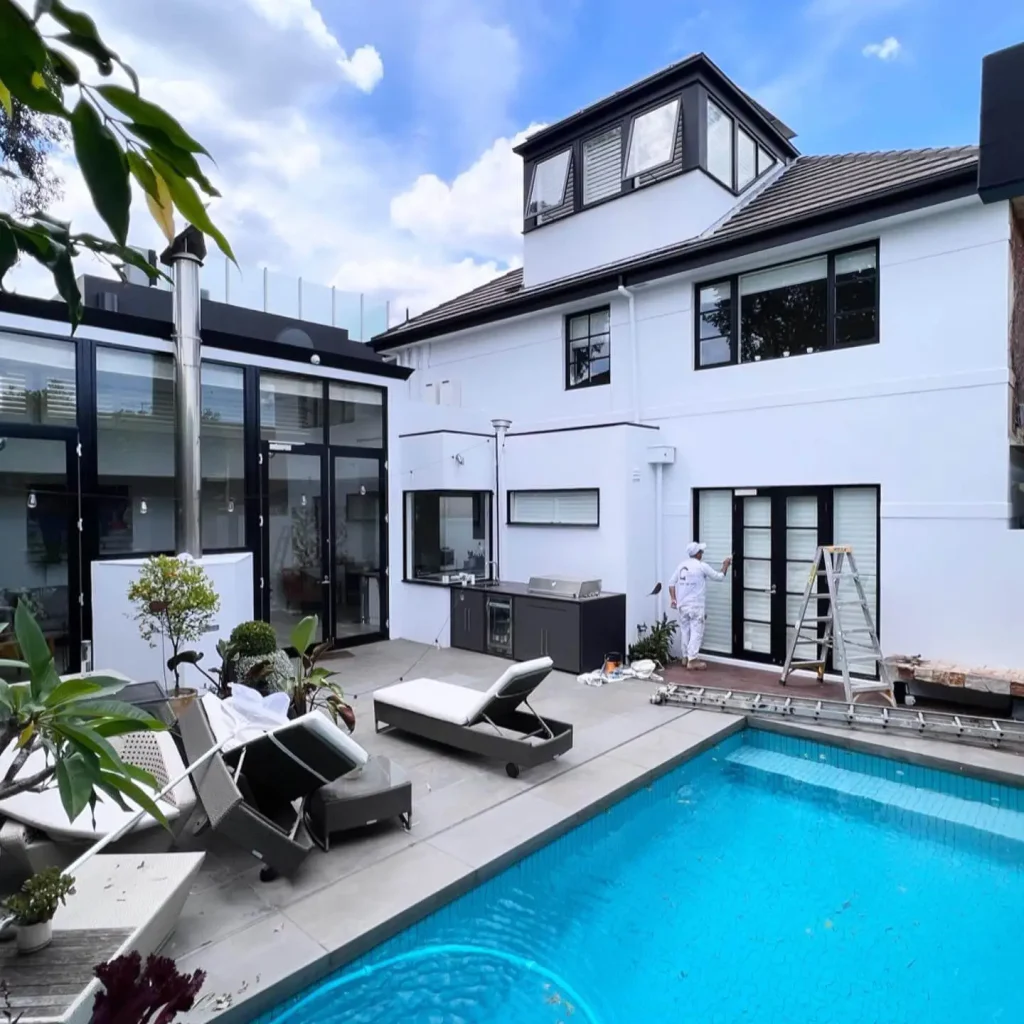
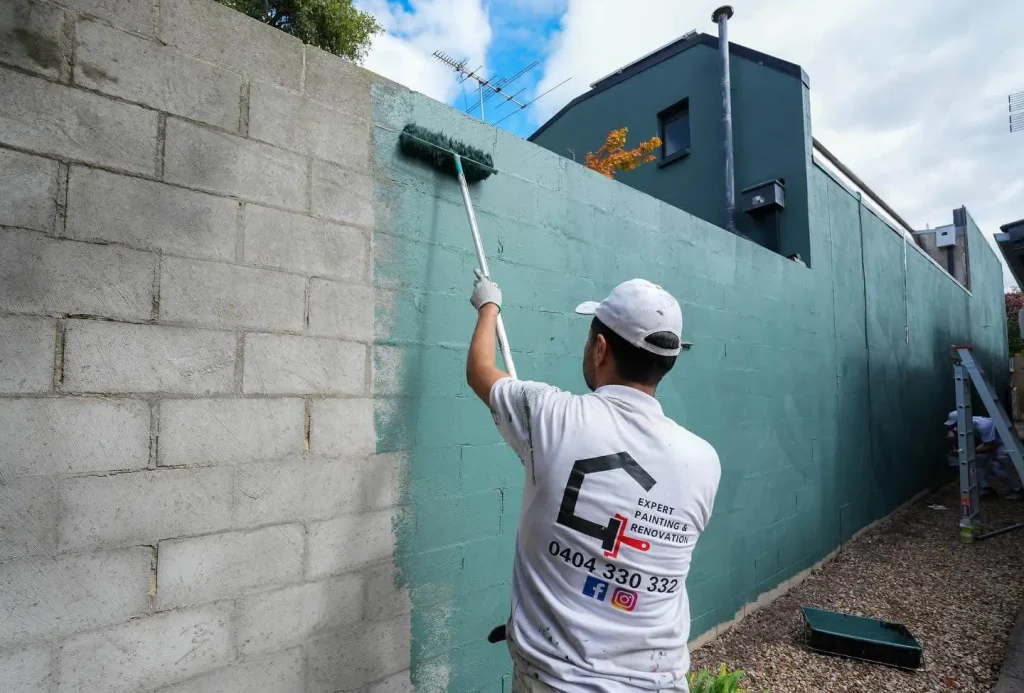
Paint reacts to the surface it lands on, not the air around it. A north or west wall in direct summer sun can sit 20 to 30 degrees above the air temperature. On a 32 degree Melbourne day, a dark rendered wall can be above 60.
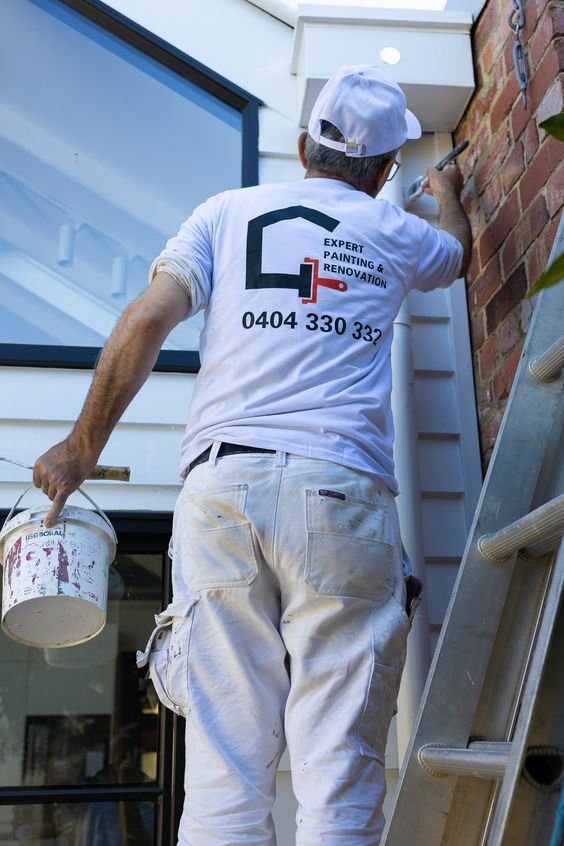
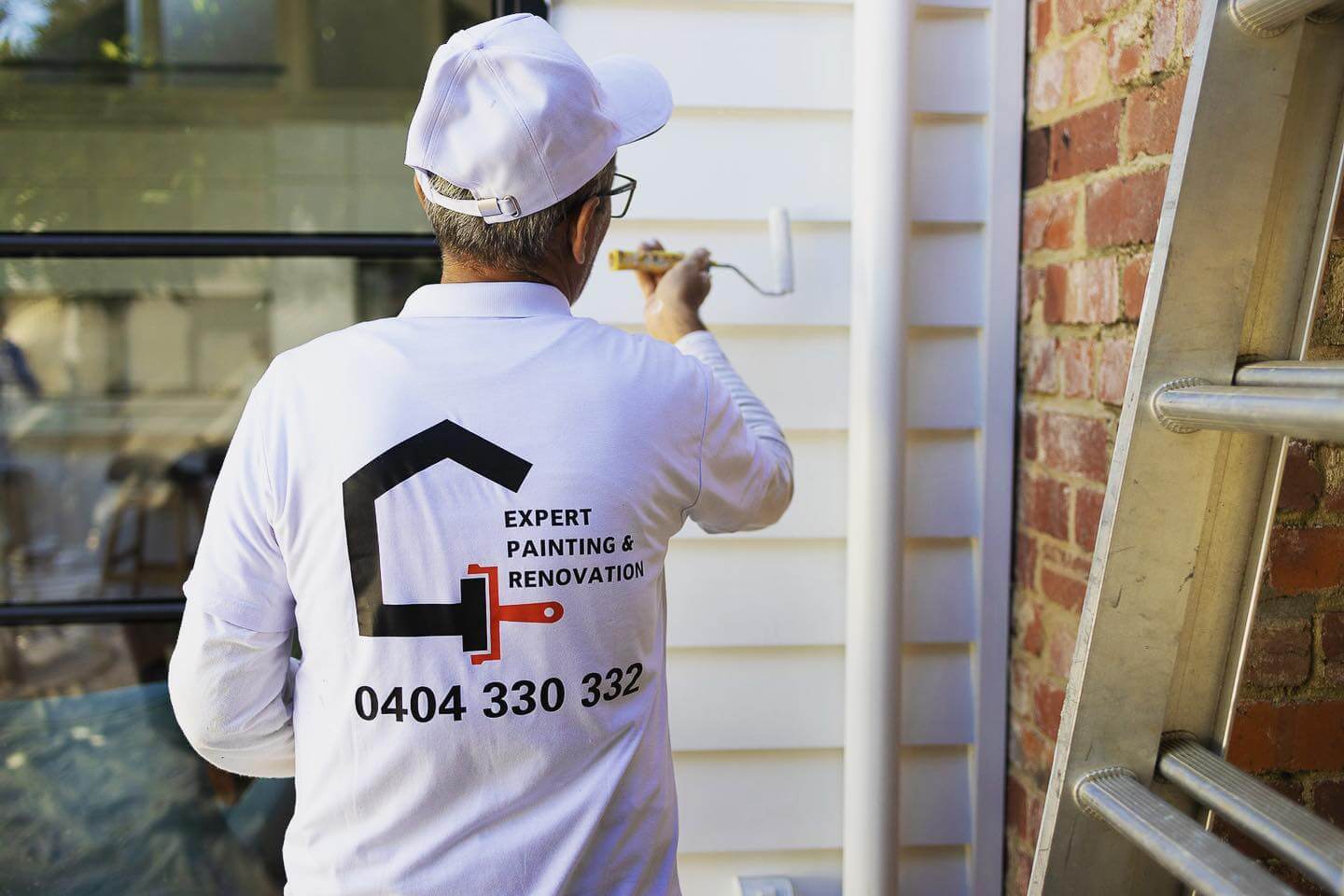
Paint applied to a surface that hot skins over before it has time to flow out and level. You get visible lap marks, poor adhesion, and a film that has not formed properly even though it looks dry within minutes. The fix is simple and costs nothing: follow the shade around the house instead of working front to back.
The same applies in reverse. On a cold morning a south-facing brick wall holds overnight cold for hours after the air has warmed up.
The temperature window
Most water-based exterior paints specify a minimum of around 10 degrees, and they mean the surface, during application and while curing.
Below that, water-based paint cannot coalesce properly. The resin particles never fuse into a continuous film, and you end up with a coating that looks fine and has a fraction of the durability it should. It often does not show for a year.
The upper limit is less about a number and more about working conditions: above roughly 35 degrees of surface temperature, most products are difficult to apply well.
What catches people out in Melbourne is the “and curing” part. A 14 degree afternoon in July can drop to 4 overnight. The paint went on inside spec and spent the night outside it.
Humidity and the number nobody checks
High humidity slows evaporation. Above about 85 per cent relative humidity, the water in the paint has nowhere to go, recoat times stretch out, and a second coat applied on schedule traps moisture underneath.
Very low humidity with wind does the opposite — the surface flashes off before you can maintain a wet edge, which shows as lap marks on large walls.
Then there is dew point, which almost nobody measures and which explains a specific class of failure. If a surface is within about three degrees of the dew point, moisture condenses on it. Paint applied late in the day in autumn can have dew settle on it before it has cured.
What that produces: brown or clear streaks running down the wall, usually a day or two later. That is surfactant leaching, the water-soluble additives being washed out of an uncured film. On enamel it shows as a dull milky bloom instead.
It is the reason good exterior crews stop earlier in the day in autumn than the daylight would suggest.
Painting weather in Melbourne, season by season
- Summer. Start early, follow the shade, stop on the sun-facing walls by mid-morning. Surface temperature is the constraint, not daylight.
- Autumn. The best exterior window of the year — mild, stable, long enough days. The trap is dew: finish early rather than late.
- Winter. Realistically two to four useful hours a day on exteriors, and some weeks none. South elevations may never get warm enough. This is the season for interior work.
- Spring. The most deceptive. Mild air temperatures, but wind and sudden showers, and a cool change can take 15 degrees out of the air in under an hour.
A painter who works straight through February afternoons on a west wall, or who keeps going until 5pm in May, is working to the clock rather than to the conditions.
Rain is not the only water problem
Obvious: do not paint in rain, and do not paint a surface that is still wet.
Less obvious is how long a surface takes to dry after rain. Render, brick and bare timber hold moisture well after they look dry on the surface, and painting over trapped moisture is a common cause of blistering and peeling. After heavy rain, exterior masonry can need several dry days.
Pressure washing before painting creates the same issue. A wall washed on Monday is not necessarily ready on Tuesday.
Interiors are not exempt
Painting weather matters inside too, just less dramatically.
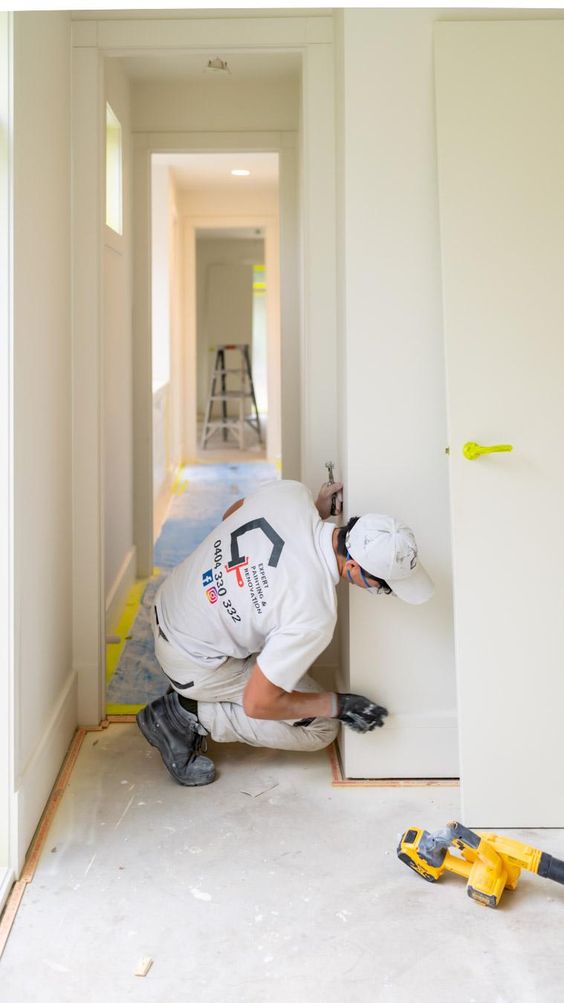
An unheated room in a Melbourne winter can sit below 10 degrees overnight. Bathrooms and laundries run high humidity. A closed-up room with no air movement can have paint still soft days later, which is usually blamed on the product rather than the conditions.
Ventilation, not time, is what dries an interior coat.
Painting weather: what to ask
- What surface temperature are you working to, and how do you check it?
- Which elevations are being done at which time of day?
- What are the recoat times for this product in these conditions, and are you extending them?
- What happens to the schedule if the weather turns?
A painter who has thought about painting weather will have answers. One who has not will talk about the forecast.
We work to the conditions
We sequence exterior work around the sun and stop when the dew point says to, which sometimes means a job takes a day longer. Call 0404 330 332 and we will tell you honestly what time of year suits your job.
📍 Our Service Areas Across Melbourne, the Mornington Peninsula, Surf Coast & Phillip Island
Melbourne & Bayside
- Expert Painting and Renovation in Richmond
- Expert Painting and Renovation in St Kilda
- Expert Painting and Renovation in South Yarra
- Expert Painting and Renovation in Malvern
- Expert Painting and Renovation in Hawthorn
- Expert Painting and Renovation in Kew
- Expert Painting and Renovation in Balwyn
- Expert Painting and Renovation in Mount Waverley
- Expert Painting and Renovation in Ringwood
- Expert Painting and Renovation in Doncaster
- Expert Painting and Renovation in Hampton
- Expert Painting and Renovation in Frankston
- Expert Painting and Renovation in Mount Eliza
- Expert Painting and Renovation in Mornington
- Expert Painting and Renovation in Mount Martha
- Expert Painting and Renovation in Rosebud
- Expert Painting and Renovation in Sorrento
Phillip Island & Bass Coast
- Expert Painting and Renovation in Flinders
- Expert Painting and Renovation in Somers
- Expert Painting and Renovation in San Remo
- Expert Painting and Renovation in Cape Woolamai
- Expert Painting and Renovation in Cowes
- Expert Painting and Renovation in Coronet Bay
- Expert Painting and Renovation in Tootgarook
- Expert Painting and Renovation in Rye
- Expert Painting and Renovation in Blairgowrie
- Expert Painting and Renovation in Portsea
- Expert Painting and Renovation in Inverloch
- Expert Painting and Renovation in Kilcunda
- Expert Painting and Renovation in Ventnor
- Expert Painting and Renovation in Newhaven
Surf Coast & Bellarine Peninsula
- Expert Painting and Renovation in Geelong
- Expert Painting and Renovation in Torquay
- Expert Painting and Renovation in Ocean Grove
- Expert Painting and Renovation in Barwon Heads
- Expert Painting and Renovation in Anglesea
- Expert Painting and Renovation in Lorne
- Expert Painting and Renovation in Apollo Bay