
Interior painting is the cheapest change you can make to a house that alters how it feels to live in. It is also the job most often judged harshly afterwards, because you look at those walls every day in every kind of light, and anything that was rushed shows up eventually.
This guide covers what a professional interior repaint involves in Melbourne, what goes wrong when it is done badly, what it costs, and how long it takes.
What actually decides the result
Almost nobody is disappointed by the colour. They are disappointed by the surface underneath it.
A flat interior wall in daylight is unforgiving. Light raking across it from a window picks out every dent, every unsanded filler patch, every ridge where a roller stopped. None of that is a paint problem; it is a preparation problem, and preparation is where the hours and the money go on a job worth paying for.
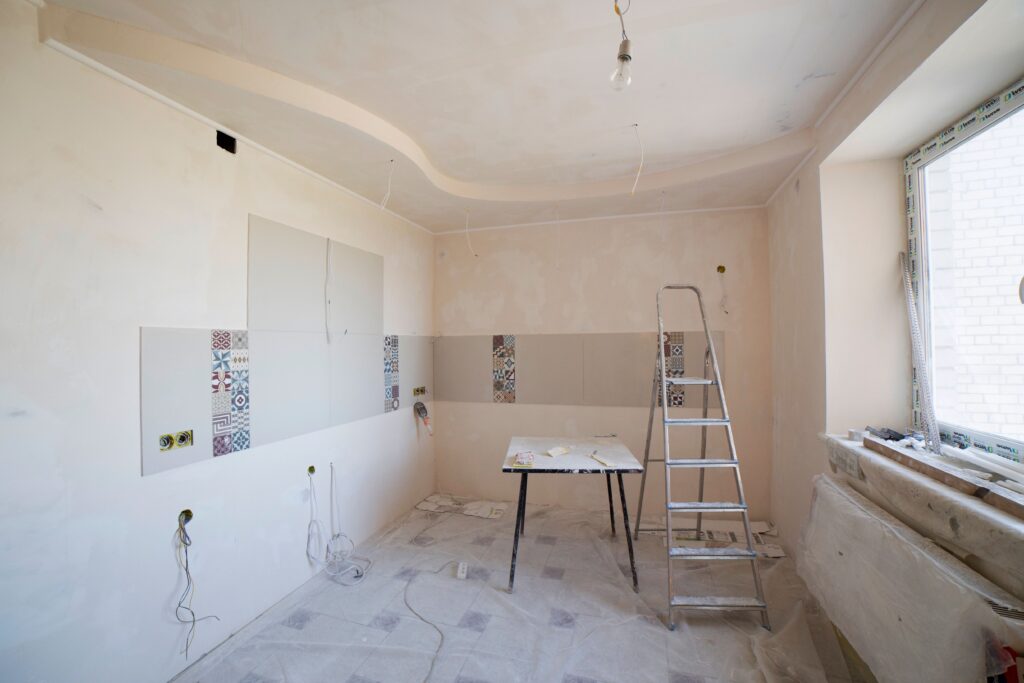
Proper interior preparation means:
- Washing walls where needed, particularly kitchens, bathrooms and anywhere with cooking residue
- Filling nail holes, dents, cracks and gaps, then sanding each one flush
- Sanding back any flaking, brush marks or texture from a previous coat
- Spot-priming every repair, every bare patch and every stain
- Caulking the gaps where skirting, architraves and cornice meet the wall
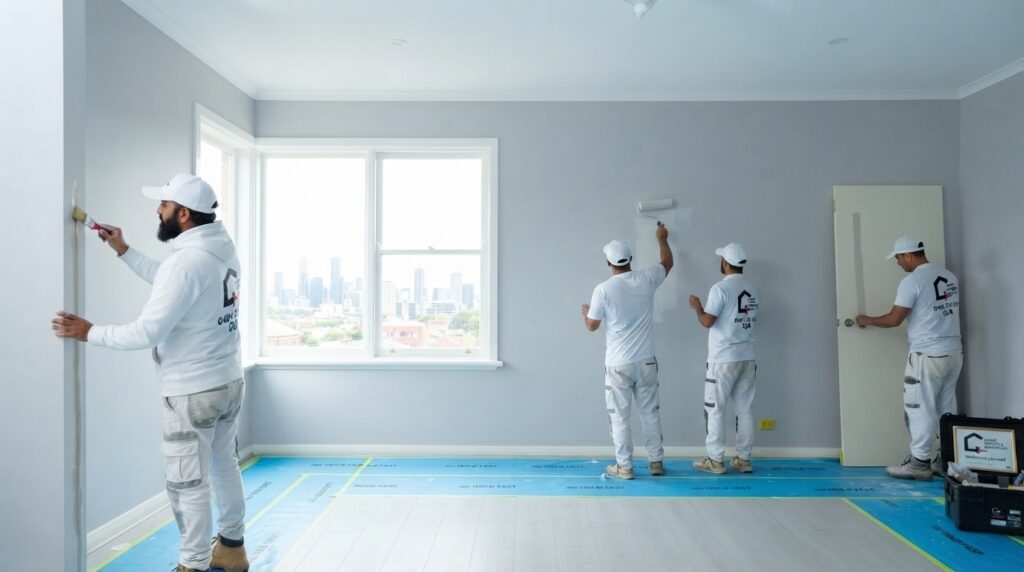
- Masking and protecting floors, furniture, fittings and hardware
That spot-priming step is the one most often skipped. Bare filler absorbs far more paint than the wall around it, so an unprimed repair shows through the finished coat as a duller patch. Painters call it flashing, and it is the single most common complaint after a repaint.
Common interior problems in Melbourne homes
| What you see | Usual cause |
|---|---|
| Patchy, uneven sheen on one wall | Repairs not spot-primed before top coats |
| Visible roller lines or lap marks | Paint spread too thin, or edges allowed to dry mid-wall |
| Cracks reappearing above doors and windows | Normal seasonal movement, filled without flexible filler or tape |
| Mould returning in a bathroom | Painted over instead of treated, or no mould-resistant product used |
| Paint peeling off a bathroom ceiling | Moisture plus a product not rated for wet areas |
| Brown staining bleeding through a ceiling | Water damage not sealed with a stain-blocking primer |
| Chipping on skirting and door frames | No undercoat, or a wall paint used on trim |
| Walls that look fine until the afternoon sun hits them | Insufficient preparation, revealed by raking light |
Most of these are preparation or product-selection failures rather than application failures, which is why the cheapest quote so often becomes the most expensive outcome.
Choosing products and finishes
Paint comes as a system: the primer or undercoat, then two top coats. Changing one part without the others is where problems start.
Walls are usually low sheen. It is washable enough for family life and forgiving enough not to spotlight imperfections. Matt looks beautiful and hides the most, but it marks easily and does not clean well, so it suits ceilings and low-traffic rooms better than hallways.
Ceilings take a dedicated flat ceiling white. It is formulated not to flash and not to reflect light down into the room.
Trims, doors and skirting take a water-based enamel in semi-gloss or gloss. Water-based enamels have largely replaced solvent-based ones in occupied homes because they smell far less and do not yellow over time.
Bathrooms, laundries and kitchens need a mould-resistant product designed for humidity.
Our paint sheen guide goes through where each finish belongs. If anyone in the house is sensitive to fumes, or there are young children or pets, low-VOC paint is worth specifying.
New plaster and repaired walls
New plasterboard and fresh setting compound are far more absorbent than a painted wall, and they must be sealed before any top coat. Skipping the sealer gives you a patchy finish that no number of top coats will even out. If your repaint follows plastering work, see painting new plasterboard.
Where walls need more than filling — cracking, holes, water damage, an uneven old surface — that is plastering work and belongs before the painter starts, not alongside.
Colour, and how Melbourne light changes it
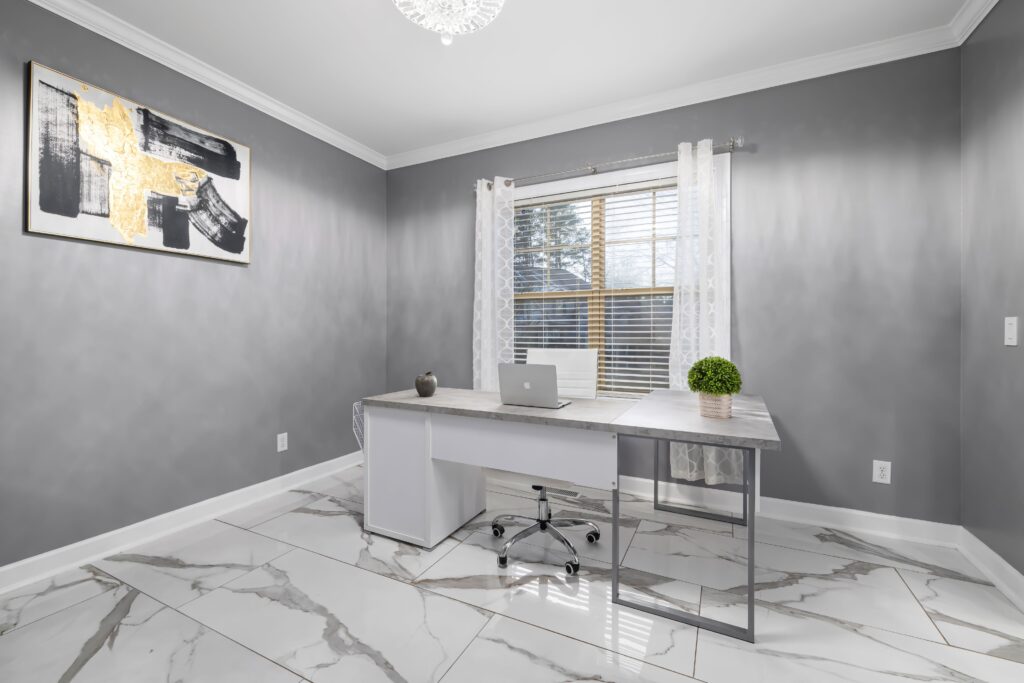
The same colour behaves differently depending on which way the room faces. South-facing rooms get cool, indirect light all day, which pushes greys towards blue and can make a crisp white feel cold. North-facing rooms get warm light and carry cooler tones comfortably. East-facing rooms are bright in the morning and flat by late afternoon.
The practical method is simple and almost nobody does it: paint sample pots onto A3 boards rather than straight onto the wall, then move the boards around the room and look at them in morning light, in the afternoon, and under your own lights at night. A colour chosen under hardware store fluorescents rarely survives contact with a real room.
For where the trends sit this year, see interior colour trends in Melbourne and our Melbourne interior paint colours guide. If you are working with a dark or narrow space, paint colours for small rooms and dark hallways covers what actually helps. For a single statement wall, feature wall ideas covers placement as well as colour.
How long an interior repaint takes
| Scope | Typical duration |
|---|---|
| One bedroom, walls only | 1 day |
| One room including ceiling and trims | 1–2 days |
| Three to four rooms | 3–5 days |
| Whole house, walls, ceilings and trims | 1–2 weeks |
| Add: removing wallpaper | 1–3 days |
| Add: significant plaster repairs | 2–4 days, plus drying |
These assume normal drying conditions. Winter in Melbourne stretches them, because recoat times lengthen in cold damp rooms. For more on why waiting between coats matters, see how long paint takes to dry.
Two things reliably add time that people do not expect: wallpaper, which can lift cleanly or fight you for days depending on what is behind it, and dark walls being painted light, which often needs an extra coat. Both are covered in removing wallpaper before painting and painting over dark walls.
What it costs
Interior painting is priced on the work, not purely on floor area, because two rooms of identical size can need very different amounts of labour.
What moves the price:
- Surface condition. Sound walls need filling and sanding. Damaged walls need repairs first.
- How much is included. Walls only is one price. Walls, ceilings, doors, skirting and architraves is a different job.
- Ceiling height. Raked ceilings, stairwells and double-height voids need platforms or scaffolding.
- Detail. Period homes with ornate cornice, picture rails, panelled doors and sash windows are slow, careful work.
- Colour change. Going dramatically lighter, or covering a strong colour, may need an extra coat.
- Access and protection. An occupied, furnished house takes longer to protect and reinstate each day than an empty one.
For a fuller breakdown see our interior house painting cost guide. When you have quotes in hand, comparing painting quotes works through them line by line.
Living in the house while it happens
Most people stay home during an interior repaint, and with reasonable planning it is not disruptive.
- Work usually runs room by room, so you always have somewhere to be
- Low-VOC products keep odour manageable in occupied rooms
- Furniture moves to the centre and gets covered rather than leaving the house
- Wardrobes, shelves and wall-mounted screens need clearing before the team arrives
- Pets are better kept out of work areas, both for their sake and the finish
A short checklist of what to do before the painters arrive is in how to prepare your home.
Room by room, what to watch for
Living areas and bedrooms. The straightforward rooms. Low sheen on walls, flat on ceilings, enamel on trims. Raking light from large windows is the main thing to prepare for.
Kitchens. Grease on walls must be washed off properly or nothing will stick. A washable finish earns its keep here.
Bathrooms and laundries. Humidity is the enemy. Mould has to be treated and killed rather than painted over, and the product needs to be rated for wet areas. See bathroom painting.
Ceilings. Harder work than walls and more obvious when done badly. Any water staining must be sealed first or it will bleed back through within weeks — see ceiling water stains and our ceiling painting guide.
Hallways and stairwells. Highest traffic in the house and the hardest to access. Worth a more durable finish than you would use in a bedroom.
Period homes. Ornate cornice, picture rails, panelled doors, sash windows and sometimes lead paint beneath later coats. If the house predates 1970, read lead paint in Melbourne homes before anyone sands anything.
Signs your interior needs repainting
- Scuffs and marks that no longer wash off
- Hairline cracking at the corners of doors and windows
- Patches where furniture or picture frames have left the wall a different shade
- Chipped or yellowed skirting and door frames
- Mould spotting in bathrooms or on cold external walls
- Colour that has simply dated, which on a sale property costs you more than the repaint would
Interior paint in a normally used home commonly lasts ten years or more. Hallways, kitchens and children's rooms wear faster than that.
Interior painting with Expert Painting and Renovation
Expert Painting and Renovation is a family-run, Aussie-local company based in Richmond with more than 9 years of experience in Melbourne homes. We prepare properly, spot-prime every repair, and use products suited to each room rather than one tin for the whole house.
Because we also do plastering, damaged walls and ceilings get repaired as part of the same job instead of being coated over or handed to another trade. Full details are on our interior painting service page, and we also cover exterior painting and house painting.
See examples in our portfolio, check coverage on our service areas page, or contact us for a quote.
Frequently asked questions
How much does interior painting cost in Melbourne? It depends on surface condition, what is included, ceiling height and the amount of detail work. Walls-only in sound condition is at one end; a period home with ornate trims and plaster repairs is at the other. Get itemised written quotes covering identical scope and compare the inclusions before the totals.
How long does interior paint last? Ten years or more in bedrooms and living areas with normal wear. Hallways, kitchens, bathrooms and children's rooms typically need attention sooner.
Do I need to move out? Usually not. Work runs room by room and low-odour products make occupied rooms practical. You will need to clear wardrobes and walls before the team arrives.
How many coats do I need? Two top coats over an appropriate primer or undercoat is standard. Dramatic colour changes, new plaster and strong existing colours may need a third.
Can you paint over wallpaper? Sometimes, but it is usually a false economy. If the paper lifts at the seams or bubbles once painted, you end up removing it anyway with a coat of paint on top making it harder.
Why did my last repaint go patchy? Almost always because repairs were not spot-primed, or only one coat was applied. Both are invisible on handover day and obvious a few weeks later in afternoon light.
Should I paint before selling? It is one of the highest-return cosmetic jobs before a sale, particularly neutralising strong colours and freshening hallways, kitchens and the entry.
📍 Our Service Areas Across Melbourne, the Mornington Peninsula, Surf Coast & Phillip Island
We proudly provide premium painting and renovation services across a wide range of Melbourne suburbs, bayside locations, coastal towns and Phillip Island communities. Whether you’re in St Kilda, South Yarra, Malvern, Richmond, Hawthorn, Kew, Balwyn, Mount Waverley, Ringwood, Hampton, Frankston, Mount Eliza, Mornington, Mount Martha, Rosebud, Sorrento, Doncaster, Geelong, Apollo Bay, Anglesea, Lorne — or coastal areas like Flinders, Somers, San Remo, Cape Woolamai, Cowes, Coronet Bay, Tootgarook, Rye, Blairgowrie, Portsea, Inverloch, Kilcunda, Ventnor and Newhaven — our team delivers high‑quality interior and exterior painting tailored to your local environment.
Explore our full service areas below:
Melbourne & Bayside
St Kilda – https://expertpaint.com.au/painting-and-renovation-in-st-kilda/
South Yarra – https://expertpaint.com.au/painting-and-renovation-in-south-yarra/
Malvern – https://expertpaint.com.au/painting-and-renovation-in-malvern
Richmond – https://expertpaint.com.au/painting-and-renovation-in-richmond/
Hawthorn – https://expertpaint.com.au/painting-and-renovation-in-hawthorn/
Kew – https://expertpaint.com.au/painting-and-renovation-in-kew/
Balwyn – https://expertpaint.com.au/painting-and-renovation-in-balwyn/
Mount Waverley – https://expertpaint.com.au/painting-and-renovation-in-mount-waverley/
Ringwood – https://expertpaint.com.au/painting-and-renovation-in-ringwood/
Hampton – https://expertpaint.com.au/painting-and-renovation-in-hampton/
Frankston – https://expertpaint.com.au/painting-and-renovation-in-frankston/
Mount Eliza – https://expertpaint.com.au/painting-and-renovation-in-mount-eliza/
Mornington – https://expertpaint.com.au/expert-painting-and-renovation-mornington/
Mount Martha – https://expertpaint.com.au/painting-and-renovation-in-mount-martha/
Rosebud – https://expertpaint.com.au/painting-and-renovation-in-rosebud/
Sorrento – https://expertpaint.com.au/painting-and-renovation-in-sorrento/
Doncaster – https://expertpaint.com.au/painting-and-renovation-in-doncaster/
Phillip Island & Bass Coast
Flinders – https://expertpaint.com.au/aussie-local-painters-flinders-victoria-expert-painting-renovation/
Somers – https://expertpaint.com.au/aussie-local-painters-somers-victoria-expert-painting-renovation/
San Remo – https://expertpaint.com.au/aussie-local-painters-san-remo-victoria-expert-painting-renovation/
Cape Woolamai – https://expertpaint.com.au/aussie-local-painters-cape-woolamai-victoria-expert-painting-renovation/
Cowes – https://expertpaint.com.au/aussie-local-painters-cowes-victoria-expert-painting-renovation/
Coronet Bay – https://expertpaint.com.au/aussie-local-painters-coronet-bay-victoria-expert-painting-renovation/
Tootgarook – https://expertpaint.com.au/aussie-local-painters-tootgarook-victoria-expert-painting-renovation/
Rye – https://expertpaint.com.au/aussie-local-painters-rye-victoria-expert-painting-renovation/
Blairgowrie – https://expertpaint.com.au/aussie-local-painters-blairgowrie-victoria-expert-painting-renovation/
Portsea – https://expertpaint.com.au/aussie-local-painters-portsea-victoria-expert-painting-renovation/
Inverloch – https://expertpaint.com.au/aussie-local-painters-inverloch-victoria-expert-painting-renovation/
Kilcunda – https://expertpaint.com.au/aussie-local-painters-kilcunda-victoria-expert-painting-renovation/
Ventnor – https://expertpaint.com.au/aussie-local-painters-ventnor-victoria-expert-painting-renovation/
Newhaven – https://expertpaint.com.au/aussie-local-painters-newhaven-victoria-expert-painting-renovation/
Surf Coast & Bellarine Peninsula
Torquay – https://expertpaint.com.au/aussie-local-painters-torquay-victoria-expert-painting-renovation/
Ocean Grove – https://expertpaint.com.au/aussie-local-painters-ocean-grove-victoria-expert-painting-renovation/
Barwon Heads – https://expertpaint.com.au/aussie-local-painters-barwon-heads-victoria-expert-painting-renovation/
Geelong – https://expertpaint.com.au/painting-and-renovation-in-geelong/
Apollo Bay – https://expertpaint.com.au/expert-painting-and-renovation-apollo-bay/
Anglesea – https://expertpaint.com.au/painting-and-renovation-in-anglesea/
Lorne – https://expertpaint.com.au/painting-and-renovation-in-lorne/