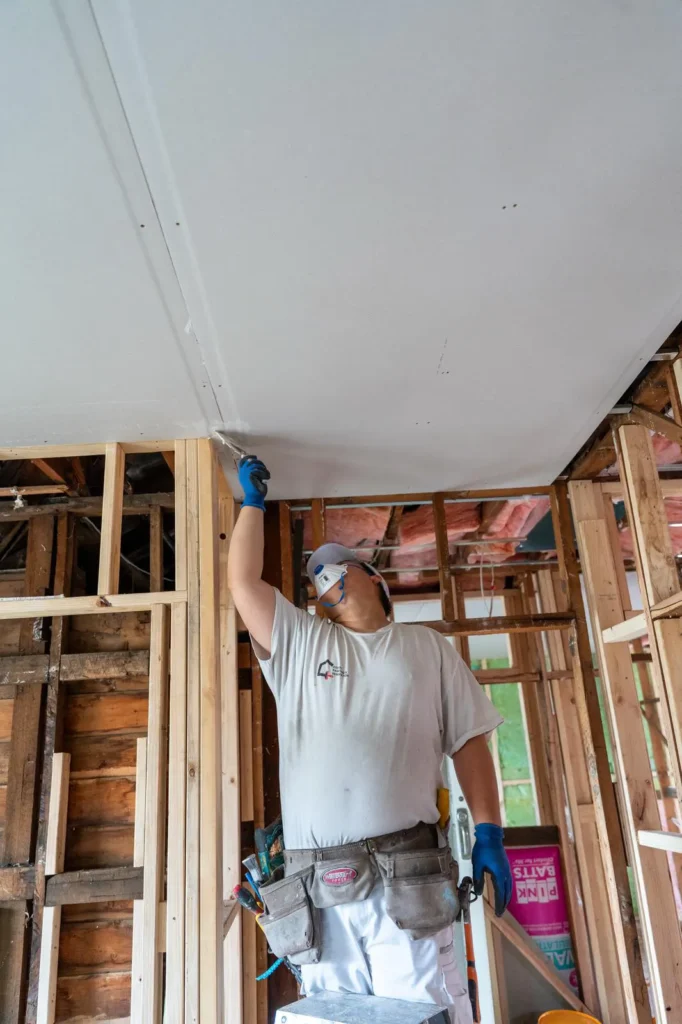

Most people searching for a plasterer do not need a room re-sheeted. They need small plastering repairs — a hole where a door handle went through, cracks along a cornice, a patch where a TV bracket came off, a ceiling stain after a leak.
These are the hardest jobs to get someone out for, and the ones most often done badly. Here is what is actually involved and how to get them done properly.
Why small plastering repairs are hard to book
A trade that charges by the day loses money on a twenty-minute repair. Travel, parking, setting up, cleaning up and the trip back cost the same whether the patch is the size of a coin or a door.
That is why most plasterers have a minimum charge or a call-out fee, and why a single small hole can cost more than people expect. It is not a markup on the hole, it is the cost of the visit.
It is also why the single most useful thing you can do is batch them. Walk the whole house, list every crack, hole, dent and failed patch, and get them all done in one visit. Ten small plastering repairs in one booking cost far less than ten separate call-outs, and often not much more than two or three.
What a small patch actually involves
The part that surprises people is that a patch is not one visit of work. It is several thin applications with drying time between them.
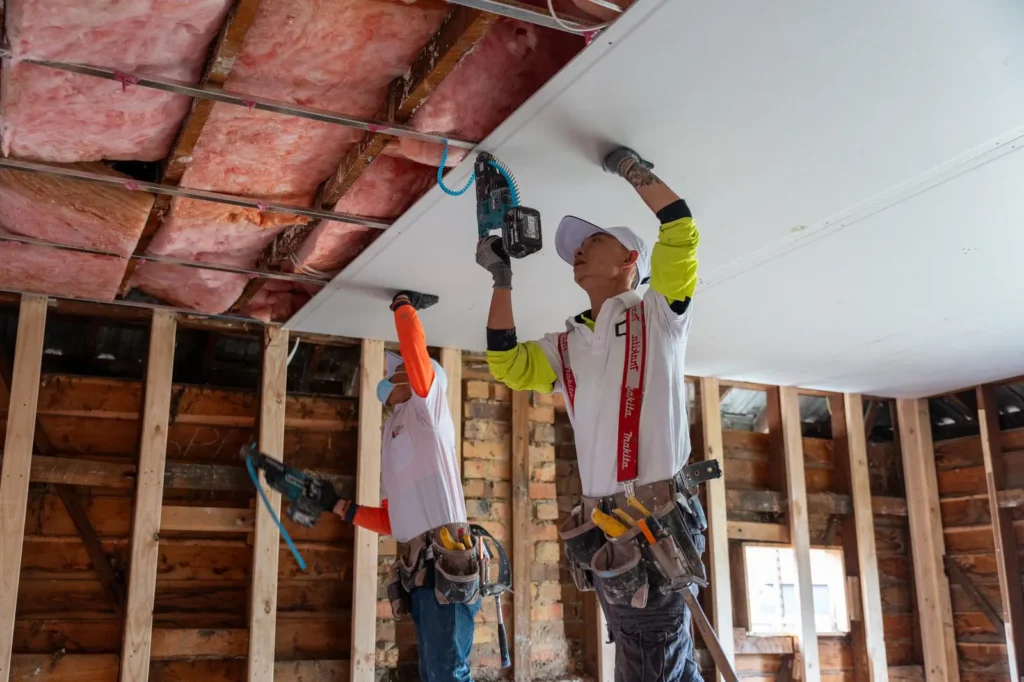
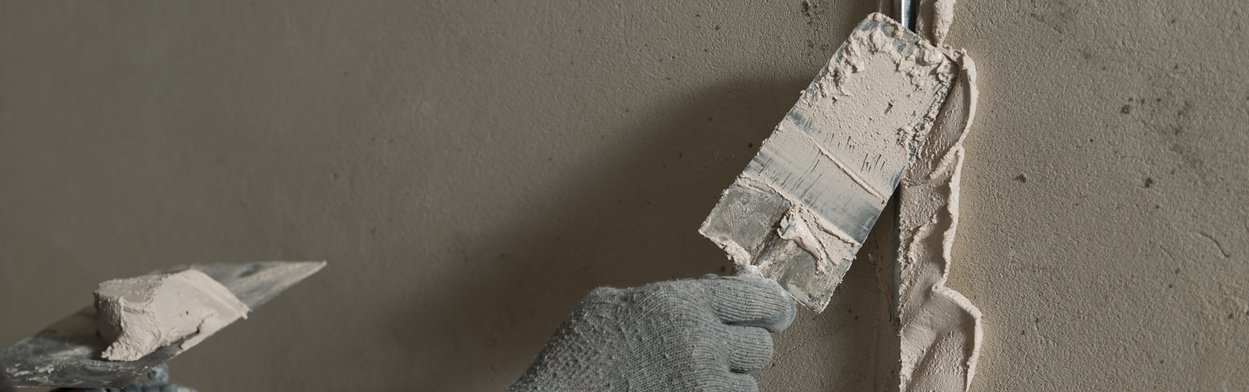
A hole in plasterboard gets cut back to a clean shape, backed so there is something behind it to hold the new material, filled, then built up in coats. Each coat of compound shrinks slightly as it dries, which is why one thick fill always sinks and shows. Two or three thin coats, each sanded, is what produces a flat result.
Cracks get raked out rather than smeared over. A crack filled without opening it up first is bridged by a thin skin of compound that cracks again at the first seasonal movement.
Realistically a proper patch spans at least two visits, or one visit with hours between stages. Anyone promising a finished, paint-ready repair in fifteen minutes is applying one coat and leaving.
The repairs we get called out for most
- Door handle holes in plasterboard
- Holes left by TV brackets, shelving and wall anchors
- Cracks where the cornice meets the wall, especially after a hot summer
- Ceiling cracks along sheet joints
- Patches where an old vent, air conditioner or heater has been removed
- Water-stained and sagging ceiling sections after a roof or plumbing leak
- Corner bead damage on external corners, usually from furniture
- Failed previous patches that have shrunk, cracked or flashed through the paint
Patch or replace the sheet?
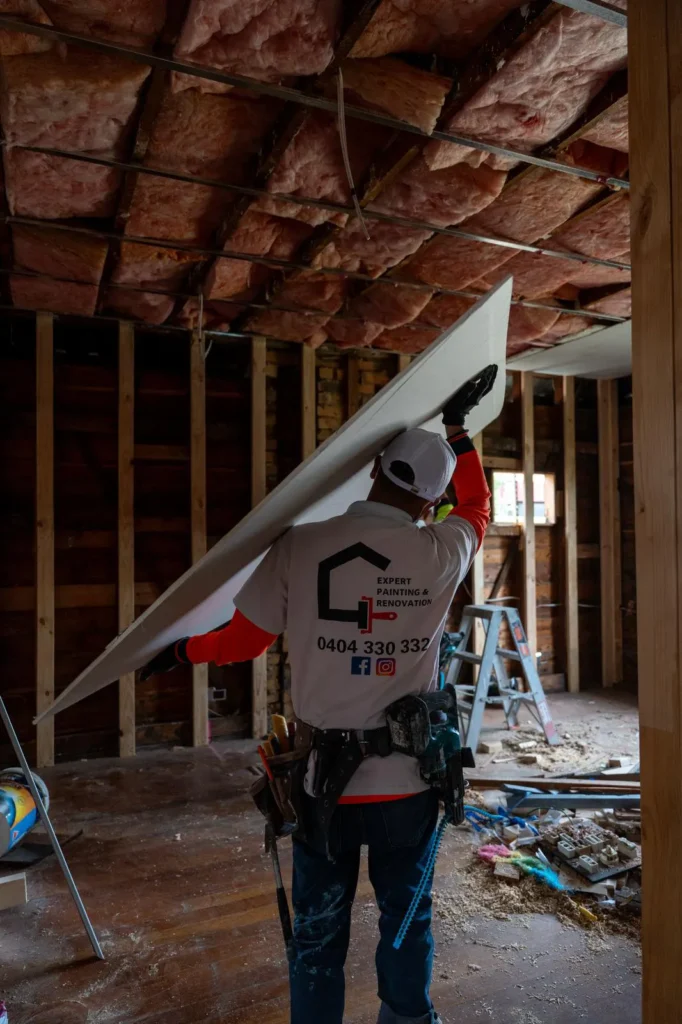
There is a point where patching stops being sensible. Several holes close together, a section that has been wet, or sheeting that has sagged away from the frame are all cases where replacing the sheet is faster and gives a better result than a cluster of patches. We have written separately on when plasterboard should be replaced rather than repaired.
For a single isolated hole in sound sheeting, patching is almost always correct.
Why the patch shows up after painting
This is the most common complaint about small plastering repairs, and it is usually not the plasterer’s fault.
Fresh compound is far more porous than the painted wall around it. Paint soaks into the patch and sits on the wall, so the patch dries duller even though the colour matches. That is flashing, and no number of topcoats fixes it.
The fix is sealing the repair before painting, and ideally rolling the whole wall corner to corner rather than spot-painting. If a repair is being painted by someone else, make sure they know it needs priming first.
Texture is the real difficulty
A flat wall is straightforward to match. A textured ceiling is not.
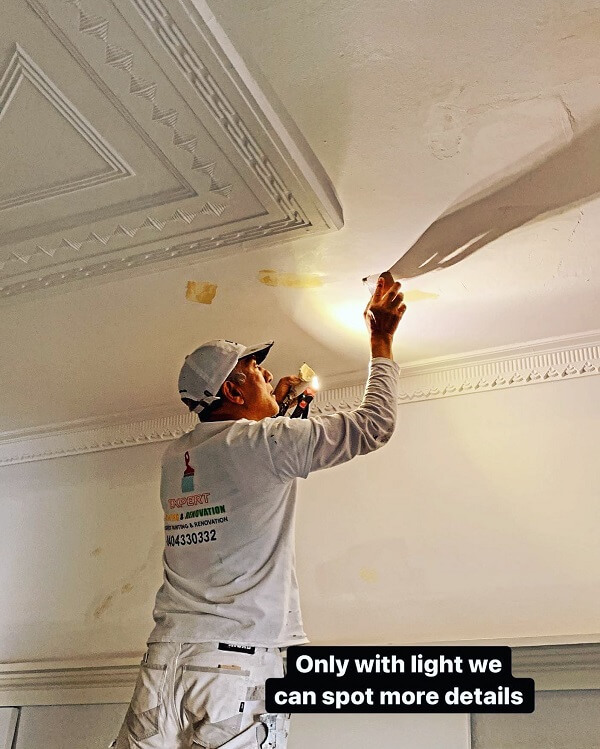
Older Melbourne homes often have stippled or swirled ceiling textures that have to be matched by hand, and a patch that is perfectly flat stands out as obviously as a lumpy one. Ask specifically whether the texture will be matched, because it is skilled work and takes longer than the patch itself.
Solid plaster in period homes is different again — modern compounds are harder than the original lime plaster and can cause the surrounding material to fail. Matching matters more than strength on those walls.
What to do before you call
- Walk every room and write down each defect, with the room name
- Photograph anything you are unsure about
- Check whether a crack is seasonal, which usually means it opens in summer and closes in winter
- Find out if the water source has been fixed before booking a stained ceiling repair — patching under an active leak wastes the visit
- Decide whether you also want the repairs painted, because that changes who you need
The one that is not a small job
Cracks that keep coming back in the same place, cracks wider than a few millimetres, stepped cracks following the brickwork, or doors and windows that have started sticking are not plastering problems. They are movement, and filling them is treating the symptom.
A good plasterer will tell you that rather than taking the money for a repair that fails again in six months.
Get them all done in one visit
We quote small plastering repairs as a list rather than per hole, so batching them is straightforward, and we tell you which ones need sealing before paint. Send through a list or some photos and call 0404 330 332.
📍 Our Service Areas Across Melbourne, the Mornington Peninsula, Surf Coast & Phillip Island
Melbourne & Bayside
- Expert Painting and Renovation in Richmond
- Expert Painting and Renovation in St Kilda
- Expert Painting and Renovation in South Yarra
- Expert Painting and Renovation in Malvern
- Expert Painting and Renovation in Hawthorn
- Expert Painting and Renovation in Kew
- Expert Painting and Renovation in Balwyn
- Expert Painting and Renovation in Mount Waverley
- Expert Painting and Renovation in Ringwood
- Expert Painting and Renovation in Doncaster
- Expert Painting and Renovation in Hampton
- Expert Painting and Renovation in Frankston
- Expert Painting and Renovation in Mount Eliza
- Expert Painting and Renovation in Mornington
- Expert Painting and Renovation in Mount Martha
- Expert Painting and Renovation in Rosebud
- Expert Painting and Renovation in Sorrento
Phillip Island & Bass Coast
- Expert Painting and Renovation in Flinders
- Expert Painting and Renovation in Somers
- Expert Painting and Renovation in San Remo
- Expert Painting and Renovation in Cape Woolamai
- Expert Painting and Renovation in Cowes
- Expert Painting and Renovation in Coronet Bay
- Expert Painting and Renovation in Tootgarook
- Expert Painting and Renovation in Rye
- Expert Painting and Renovation in Blairgowrie
- Expert Painting and Renovation in Portsea
- Expert Painting and Renovation in Inverloch
- Expert Painting and Renovation in Kilcunda
- Expert Painting and Renovation in Ventnor
- Expert Painting and Renovation in Newhaven
Surf Coast & Bellarine Peninsula
- Expert Painting and Renovation in Geelong
- Expert Painting and Renovation in Torquay
- Expert Painting and Renovation in Ocean Grove
- Expert Painting and Renovation in Barwon Heads
- Expert Painting and Renovation in Anglesea
- Expert Painting and Renovation in Lorne
- Expert Painting and Renovation in Apollo Bay