
How many coats of paint does a job actually need? The honest answer is two, over a properly prepared surface. That is the standard a professional job is built on, and it is what almost every paint manufacturer specifies. But “two coats” on a quote can mean very different things depending on what is underneath, and that is where most disputes between homeowners and painters begin.
Why one coat is almost never enough
A single coat of paint does three jobs badly. It does not hide what is underneath, it does not build enough film thickness to be durable, and it dries to an uneven sheen.
Hiding is the obvious one. Roll one coat of white over a beige wall and you will see the beige through it, particularly in raking afternoon light. Less obvious is film build. Paint protects a surface because there is enough of it there — a typical wall paint is designed to end up around 60 to 80 microns dry across two coats. One coat gets you roughly half that, and it wears through at door handles, light switches and skirting level within a couple of years.
The third problem is sheen. Paint absorbs unevenly into patched, sanded or porous areas. One coat leaves those patches duller than the rest of the wall — a effect known as flashing, and it is very visible on anything above a matt finish.
When a job genuinely needs three or more
Three coats is not an upsell in these situations. It is the only way to get a sound result.
- Going from a dark colour to a light one. Deep reds, navies and charcoals need an opaque barrier before the topcoat, usually a tinted sealer plus two finish coats.
- Strong or vivid colours. Bright yellows, oranges and some reds use transparent pigments with poor natural hiding, and three coats is often specified on the tin.
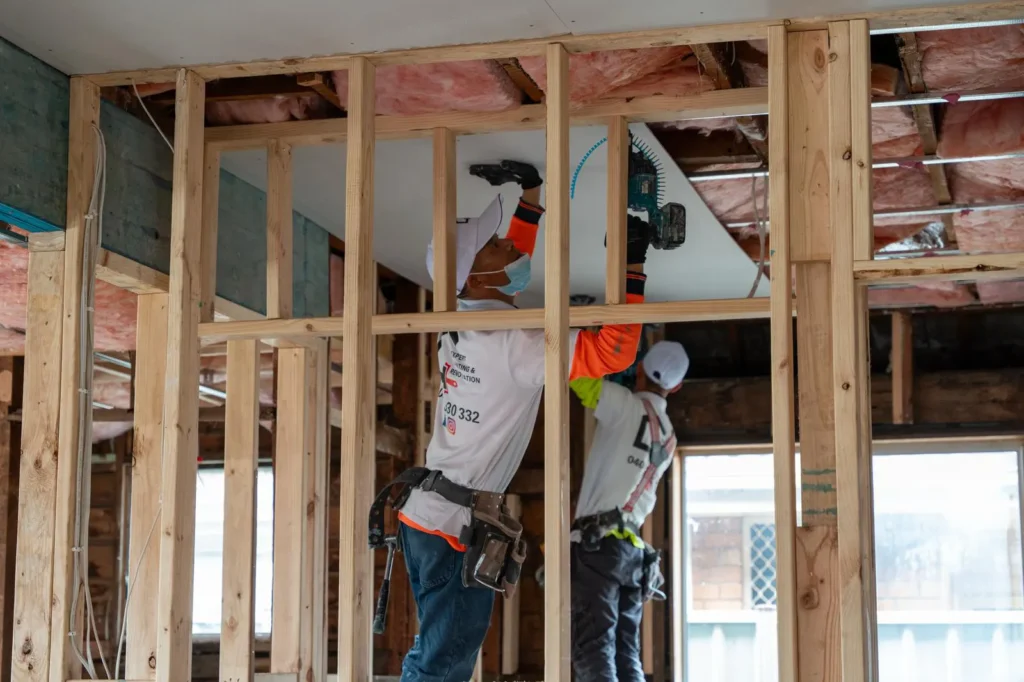
- Bare or newly patched substrates. New plasterboard, bare timber and fresh render all need a sealer or primer first, then two finish coats.
- Heavily repaired walls. If a room has had extensive patching, the repairs will flash through two coats.
- Ceilings with water staining. The stain needs blocking before anything else, or it will migrate back through.
If you are repainting new plasterboard, the sealer coat is not optional and not a substitute for a finish coat. We have written separately about why sealing comes first.
What “a coat” actually means
A coat is not a quantity of paint, it is a rate of application. Paint tins list a spread rate — commonly 14 to 16 square metres per litre for a wall paint. A painter applying 20 square metres per litre is stretching the product, and the result is a thin coat that technically exists but does not perform.
This is worth knowing because it explains how two quotes for “two coats” can differ by thousands. One painter is applying the product at the specified rate across properly prepared walls. The other is thinning it out over whatever is there.
Recoat times, and why Melbourne weather matters
Most water-based paints are touch dry in under an hour and recoatable in two to four. That holds in a dry Melbourne summer. It does not hold in July.
In cold, damp conditions — below about 10 degrees, or above 85 per cent humidity — the water in the paint has nowhere to go. Recoat windows stretch out, and a second coat applied too early traps moisture underneath, which shows up later as poor adhesion or a soft, marking finish. A painter working through a Melbourne winter should be extending recoat times, not compressing them to finish on schedule.
Exterior work is stricter again. Surface temperature matters more than air temperature, and a north or west wall in full sun can be 15 degrees hotter than the forecast. Paint applied to a hot surface skins over before it can flow out properly.
Ceilings are their own problem
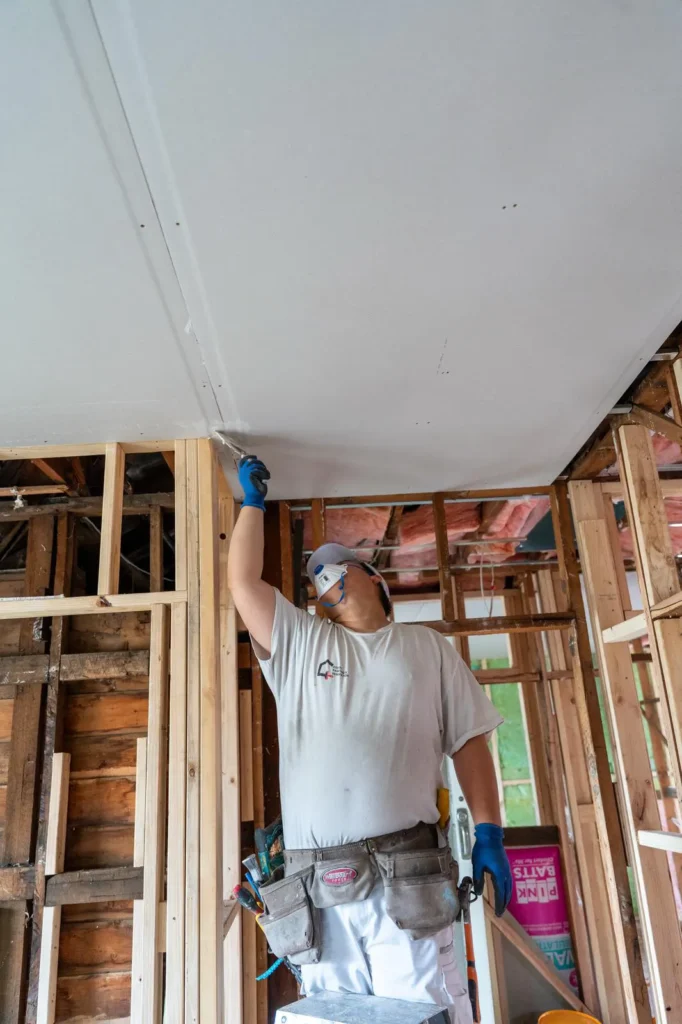
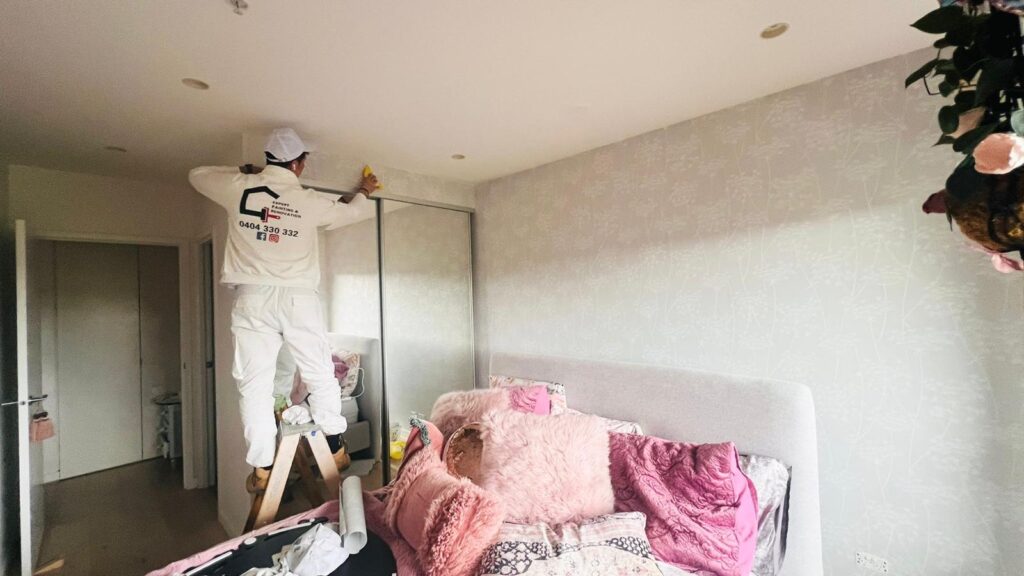
Ceilings almost always need two coats even when you are painting white over white. They are viewed at a shallow angle across their whole length, which is the worst possible viewing condition for hiding roller lap marks and sheen variation. One coat on a ceiling reads as patchy from the doorway.
Ceilings in kitchens and bathrooms often need a third, because cooking residue and steam leave a film that the first coat has to seal rather than cover.
Red flags in a quote
- The quote says “paint” without saying how many coats of paint are included.
- There is no separate line for undercoat, sealer or primer on bare or patched surfaces.
- It offers “one coat and touch up where needed”. Touch-ups flash. This is not a two-coat finish by another name.
- Preparation is described in one word. Preparation is most of the labour on a repaint, and a quote that glosses over it is quoting a different job.
- The number of coats is not stated per surface. Walls, ceilings and trim often need different numbers.
How many coats of paint affects what you pay
A third coat across a whole house is not a third more cost, because the preparation and setup are already done. In practice an extra coat adds somewhere between 20 and 35 per cent to the painting portion of a job. That is why it is worth asking for it to be priced as an option rather than assumed either way.
It also means the cheapest quote is often the one planning to apply less paint. If you are comparing numbers, compare coats and spread rate first — our breakdown of what actually drives painting prices goes into the other variables.
What to ask before you sign
- How many coats on walls, ceilings and trim, listed separately?
- What primer, sealer or undercoat is going on, and where?
- What product, and at what spread rate?
- What happens if the colour does not hide in two coats — who absorbs the third?
- What recoat times are you allowing for, given the season?
A painter who can answer those five questions without hesitating is quoting a real job. One who cannot is quoting a number.
Talk to us about your job
We quote coats explicitly, per surface, and we tell you before we start if a colour change or a substrate means you need a third. If you want a straight answer on what your place actually needs, call 0404 330 332 or send us the details and we will come and look at it.
📍 Our Service Areas Across Melbourne, the Mornington Peninsula, Surf Coast & Phillip Island
Melbourne & Bayside
- Expert Painting and Renovation in Richmond
- Expert Painting and Renovation in St Kilda
- Expert Painting and Renovation in South Yarra
- Expert Painting and Renovation in Malvern
- Expert Painting and Renovation in Hawthorn
- Expert Painting and Renovation in Kew
- Expert Painting and Renovation in Balwyn
- Expert Painting and Renovation in Mount Waverley
- Expert Painting and Renovation in Ringwood
- Expert Painting and Renovation in Doncaster
- Expert Painting and Renovation in Hampton
- Expert Painting and Renovation in Frankston
- Expert Painting and Renovation in Mount Eliza
- Expert Painting and Renovation in Mornington
- Expert Painting and Renovation in Mount Martha
- Expert Painting and Renovation in Rosebud
- Expert Painting and Renovation in Sorrento
Phillip Island & Bass Coast
- Expert Painting and Renovation in Flinders
- Expert Painting and Renovation in Somers
- Expert Painting and Renovation in San Remo
- Expert Painting and Renovation in Cape Woolamai
- Expert Painting and Renovation in Cowes
- Expert Painting and Renovation in Coronet Bay
- Expert Painting and Renovation in Tootgarook
- Expert Painting and Renovation in Rye
- Expert Painting and Renovation in Blairgowrie
- Expert Painting and Renovation in Portsea
- Expert Painting and Renovation in Inverloch
- Expert Painting and Renovation in Kilcunda
- Expert Painting and Renovation in Ventnor
- Expert Painting and Renovation in Newhaven
Surf Coast & Bellarine Peninsula
- Expert Painting and Renovation in Geelong
- Expert Painting and Renovation in Torquay
- Expert Painting and Renovation in Ocean Grove
- Expert Painting and Renovation in Barwon Heads
- Expert Painting and Renovation in Anglesea
- Expert Painting and Renovation in Lorne
- Expert Painting and Renovation in Apollo Bay