
Bathrooms are the toughest room in the house for paint. Steam, splashes and poor ventilation create exactly the conditions mould loves, which is why bathroom paint often bubbles, peels or turns spotty long before paint elsewhere in the home.
With the right products and preparation, a bathroom repaint can stay clean and fresh for years. Here’s how it’s done properly.
Why bathroom paint fails
- Moisture behind the paint. Steam soaks into unsealed plaster, then pushes the paint film off from behind.
- Painting over mould. Covering mould without treating it means it grows straight back through the new paint.
- The wrong product. Standard wall paint isn’t designed for constant moisture.
- Poor ventilation. Without an exhaust fan or open window, steam sits in the room long after a shower.
- Skipped primer. Bare or patched plaster absorbs moisture unless it’s sealed first.
Choosing the right paint
Look for a paint made for wet areas, usually labelled as a kitchen and bathroom range. These products contain mould inhibitors and resist moisture far better than standard wall paint.
| Surface | Recommended finish |
|---|---|
| Bathroom walls | Wet-area paint, low sheen or satin |
| Bathroom ceilings | Wet-area ceiling paint with mould inhibitor |
| Doors, trims and window frames | Semi-gloss or gloss enamel |
| Previously mouldy areas | Mould treatment, sealer, then wet-area paint |
Glossier finishes shed moisture better and wipe clean more easily, which is why flat paint is rarely a good choice in a bathroom.
Treating mould before you paint
Mould has to be removed, not covered. The usual process is to clean the affected area with a suitable mould treatment, let it work and dry fully, then seal the surface before painting. Painting over live mould is the single most common reason bathroom paint fails within months.
If mould keeps returning in the same spot, there may be a leak or a ventilation problem behind it. That needs fixing first, or no paint will solve it.
Preparation that makes the difference
- Remove loose and flaking paint by scraping and sanding.
- Wash surfaces to remove soap residue, grease and hair product build-up.
- Treat and remove any mould.
- Fill cracks and holes, and repair damaged plaster.
- Apply a sealer or primer suited to the surface.
- Apply two coats of wet-area paint.
- Allow proper drying time before the room goes back into heavy use.
Ventilation matters as much as paint
Even the best bathroom paint struggles without airflow. Run the exhaust fan during showers and for a while afterwards, open a window when you can, and leave the door ajar to let steam escape. Wiping down walls and mirrors after a long shower also helps.
Colour ideas for bathrooms
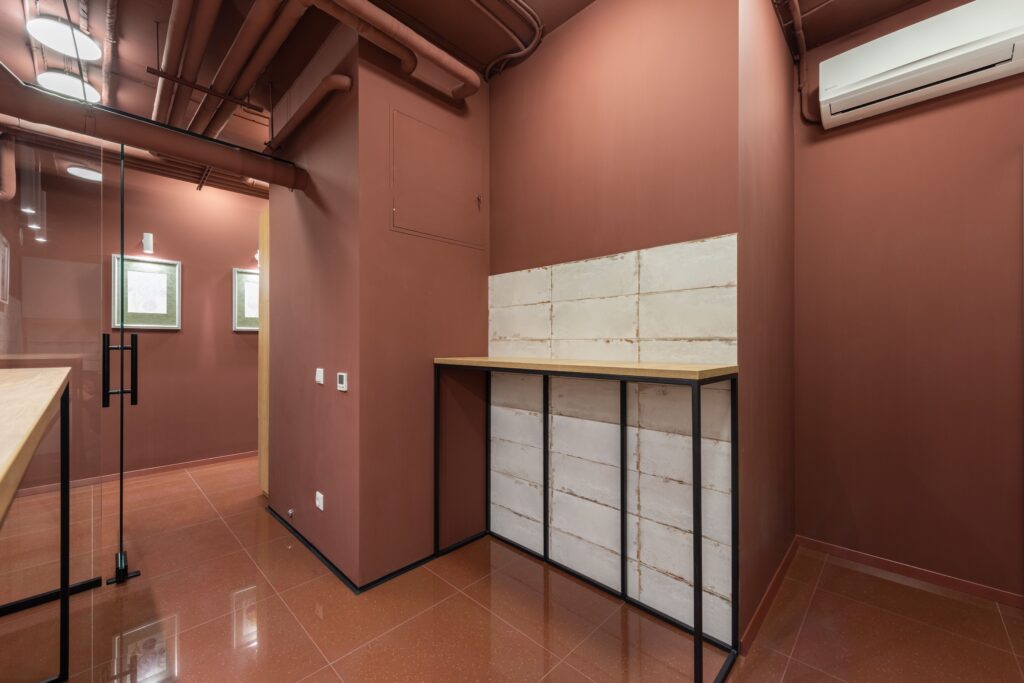
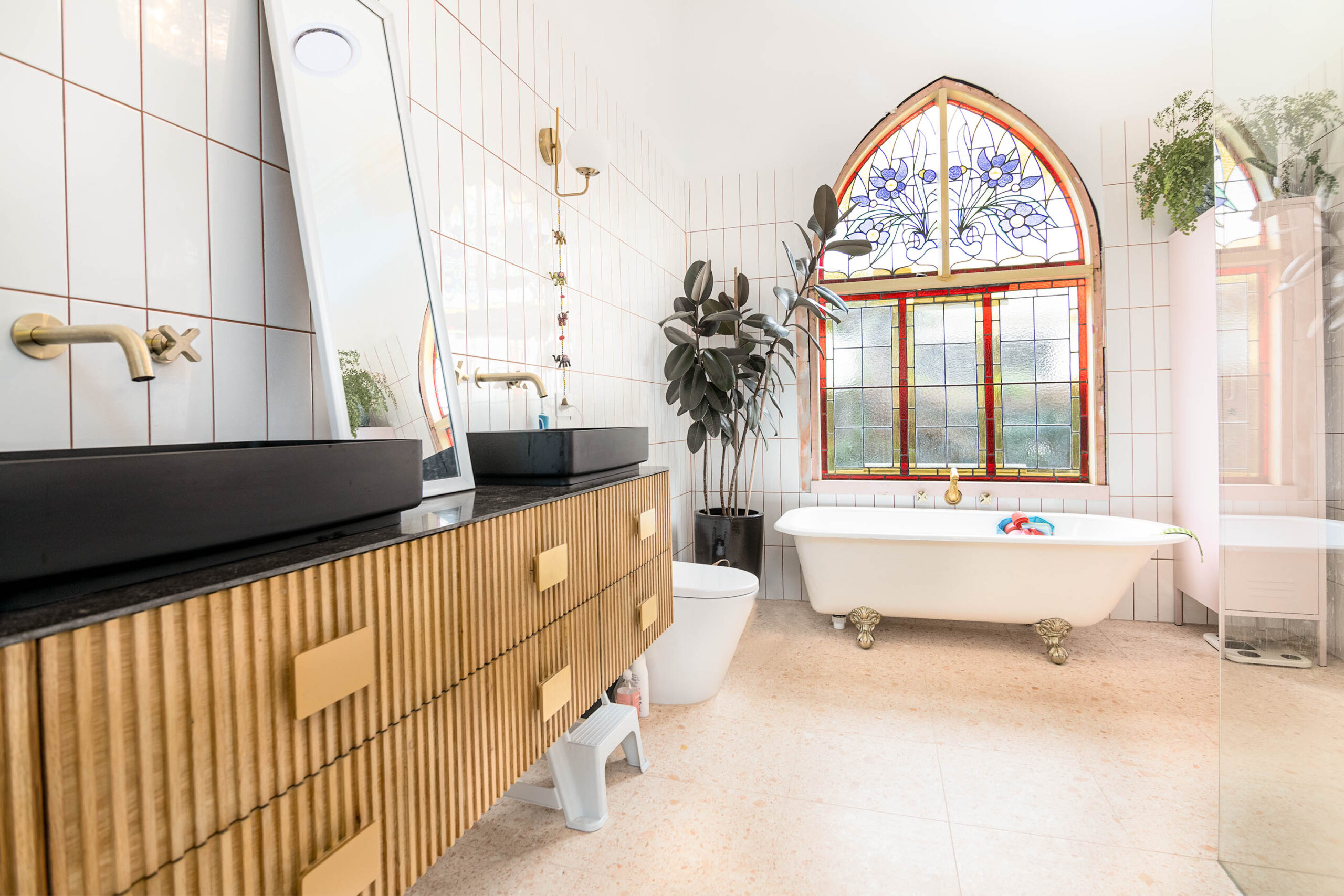
Soft whites and warm off-whites keep small bathrooms feeling bright. Muted greens, soft blues and greys create a calm, spa-like feel and pair well with timber and brass fittings. Deeper colours can look striking in a powder room, where moisture is less of an issue.
Don’t forget the ceiling
Bathroom ceilings take the most steam and are often where mould appears first. Use a wet-area ceiling paint rather than standard ceiling paint, and check for any stains, which can point to a leak from above.
Talk to your local team
Expert Painting and Renovation is a family-run, Aussie-local company based in Richmond, with more than 9 years of experience as Melbourne painters. We check what your walls are made of, treat problems properly and use products designed for wet areas. We also handle plastering repairs, so damaged bathroom walls and ceilings can be fixed before painting.
Learn more about our interior painting service.
FAQ
Can I just paint over mould in my bathroom?
No. Mould must be treated and removed first, or it will grow back through the new paint.
What paint is best for bathrooms?
A paint made for kitchens and bathrooms, with a mould inhibitor, in a low sheen, satin or semi-gloss finish.
Why does my bathroom paint keep peeling?
Usually moisture getting behind the paint, often because the surface wasn’t sealed or the room isn’t well ventilated.
How long should I wait before showering after painting?
Give the paint as long as possible to dry, ideally a couple of days, and ventilate the room well when you do use it.
Tired of mouldy, peeling bathroom walls? Contact Expert Painting and Renovation for a quote.
About Expert Painting & Renovation
Expert Painting and Renovation is an Aussie-local, family-run company based in Richmond, Melbourne, with more than 9 years of experience in residential and commercial painting and renovation. Our specialists deliver premium workmanship, timely service and durable finishes designed for Melbourne homes.
- Ceiling crack repairs
- Sagging ceiling restoration
- Water‑damaged ceiling repairs
- Cornice replacement
- Full plastering services
- Interior & exterior painting
- Weatherboard restoration
- Deck & timber maintenance
- Roof painting
- Rendering & texture coating
- Commercial Painting
- Plastering Services
- House Painting
Whether you need maintenance advice, a single-room refresh or a full home makeover, our team is just a call away.
📍 Our Service Areas Across Melbourne, the Mornington Peninsula, Surf Coast & Phillip Island
Melbourne & Bayside
- Expert Painting and Renovation in Richmond
- Expert Painting and Renovation in St Kilda
- Expert Painting and Renovation in South Yarra
- Expert Painting and Renovation in Malvern
- Expert Painting and Renovation in Hawthorn
- Expert Painting and Renovation in Kew
- Expert Painting and Renovation in Balwyn
- Expert Painting and Renovation in Mount Waverley
- Expert Painting and Renovation in Ringwood
- Expert Painting and Renovation in Doncaster
- Expert Painting and Renovation in Hampton
- Expert Painting and Renovation in Frankston
- Expert Painting and Renovation in Mount Eliza
- Expert Painting and Renovation in Mornington
- Expert Painting and Renovation in Mount Martha
- Expert Painting and Renovation in Rosebud
- Expert Painting and Renovation in Sorrento
Phillip Island & Bass Coast
- Expert Painting and Renovation in Flinders
- Expert Painting and Renovation in Somers
- Expert Painting and Renovation in San Remo
- Expert Painting and Renovation in Cape Woolamai
- Expert Painting and Renovation in Cowes
- Expert Painting and Renovation in Coronet Bay
- Expert Painting and Renovation in Tootgarook
- Expert Painting and Renovation in Rye
- Expert Painting and Renovation in Blairgowrie
- Expert Painting and Renovation in Portsea
- Expert Painting and Renovation in Inverloch
- Expert Painting and Renovation in Kilcunda
- Expert Painting and Renovation in Ventnor
- Expert Painting and Renovation in Newhaven
Surf Coast & Bellarine Peninsula
- Expert Painting and Renovation in Geelong
- Expert Painting and Renovation in Torquay
- Expert Painting and Renovation in Ocean Grove
- Expert Painting and Renovation in Barwon Heads
- Expert Painting and Renovation in Anglesea
- Expert Painting and Renovation in Lorne
- Expert Painting and Renovation in Apollo Bay