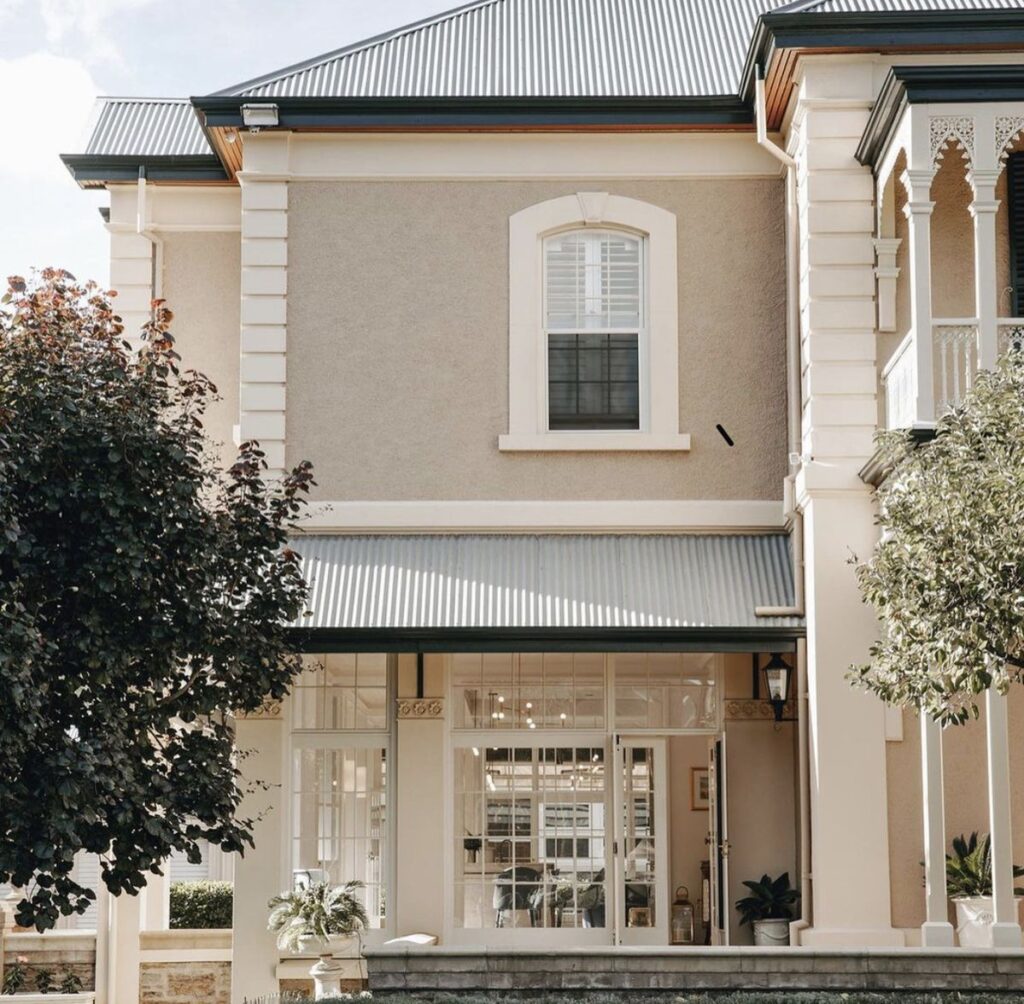

If your Melbourne home was built or last painted before 1970, there is a reasonable chance lead paint is still on it somewhere, usually under later coats. Lead paint is harmless while it is intact and undisturbed. The danger comes from the repaint itself, because sanding, scraping and heat-stripping turn a stable coating into fine dust and fumes that spread through the whole house.
This guide covers which homes are affected, how to find out, and how a repaint is done safely.
Which Melbourne homes are likely to have lead paint
Paint sold in Australia once contained very high levels of lead, in some cases up to 50 per cent. The legal limit was cut to 1 per cent in 1965, to 0.25 per cent in 1992, and to 0.1 per cent in 1997.
In practice:
- Built before 1950: assume lead paint is present unless testing shows otherwise. This covers most Victorian, Edwardian, Federation and early weatherboard homes across Richmond, Fitzroy, Carlton, Brunswick and the inner suburbs.
- Built 1950 to 1970: lead paint is common, particularly on exteriors, window frames and doors.
- Built 1970 to 1997: lead content is much lower but not always zero.
- Built after 1997: lead paint is not a practical concern.
Lead was used most heavily in oil-based enamels, which is why it turns up most often on the surfaces that were traditionally enamelled: window frames, sills, doors, skirting boards, architraves, stair balustrades, eaves, fascias and weatherboards.
Why it matters during a repaint
Intact lead paint sitting under three later coats is not doing any harm. Preparation changes that. Dry sanding a weatherboard wall, taking a heat gun to a window frame or scraping flaking eaves generates lead dust and fume that settles in soil, carpet, roof cavities and ceiling spaces, where it stays.
Lead is absorbed most readily by young children and unborn babies, and it accumulates in the body over time. There is no level of exposure considered beneficial. This is the single reason lead paint is worth taking seriously rather than treating as an old-house quirk.
How to find out if you have it
Home test swabs are sold at hardware stores and give a quick indication on an exposed surface. They are useful for a first look but they only test the layer they touch, so a negative result on a modern top coat tells you nothing about what is underneath.
Laboratory analysis of a paint chip is the reliable method. A small sample containing every layer down to the substrate is sent to a NATA-accredited laboratory.
XRF testing by a licensed assessor reads through the full paint stack on site without damaging the surface, and is the usual approach when a whole house needs assessing.
If you are planning to disturb painted surfaces in a pre-1970 home, testing before work starts is far cheaper than dealing with contamination afterwards.
Safe preparation methods
The Australian Standard AS 4361.2, *Guide to lead paint management: residential and commercial buildings*, sets out accepted practice. The Commonwealth also publishes a plain-language guide, *Lead Alert: The Six Step Guide to Painting Your Home*, which is worth reading if you are considering doing any of the work yourself.
Methods to avoid entirely:
- Dry sanding, including with a power sander
- Abrasive blasting
- Open-flame burning off
- High-temperature heat guns, which vaporise lead
- Dry scraping without containment
Accepted methods:
- Wet sanding, which keeps dust bound in water rather than airborne
- Chemical strippers, which lift paint as a soft mass instead of dust
- Wet scraping with the waste collected on plastic sheeting
- Low-temperature infrared stripping, kept below the point where lead fumes
- Vacuum-shrouded sanders fitted with HEPA filtration
Containment matters as much as method. That means plastic sheeting on the ground, soil and garden beds covered, windows and doors sealed, debris collected rather than hosed away, and disposable coveralls and P2 respirators for anyone working.
Encapsulation is often the better answer
Removing every trace of lead paint from a weatherboard home is expensive, slow and generates a large volume of contaminated waste. In most cases the better approach is to stabilise what is there and seal it in.
That means removing only the paint that is loose or failing, using wet methods and containment, then priming and recoating so the remaining lead paint is locked beneath a sound, intact film. The lead stays on the building but is no longer accessible, and the surface is protected from further breakdown. It is a well-established approach and usually the sensible one for a home that is being repainted rather than stripped back to bare timber.
When to bring in a specialist
A professional painter experienced with period homes can handle most lead paint repaints using the methods above. Consider a licensed lead removalist when:
- Large areas of paint are flaking, blistering or chalking badly
- The substrate needs to go back to bare timber for repair
- Soil around the house has visible paint debris from past work
- The property is a childcare centre, school or similar
- Anyone in the household is pregnant or there are children under five, and extensive disturbance is planned
What this means for your quote
A lead-safe repaint takes longer and costs more than a standard one, because containment, wet methods and waste handling all add time. A quote that proposes dry sanding a pre-1970 weatherboard exterior is either unaware of the issue or ignoring it, and that is a reasonable thing to ask about directly when you are comparing painting quotes.
Ask any painter quoting on a period home what their preparation method is, whether they have tested or will test, and how they will contain and dispose of waste.
Lead-safe repainting with Expert Painting and Renovation
Expert Painting and Renovation is a family-run, Aussie-local company based in Richmond, with more than 9 years of experience on Melbourne homes, including a great many period properties where lead paint is part of the job.
We work across exterior painting, interior painting and house painting, and we also handle plastering and timber repairs, so damaged substrates underneath old paint can be dealt with properly rather than coated over. See examples in our portfolio or check the suburbs we cover on our service areas page.
FAQ
Is lead paint illegal in Australia? Paint containing more than 0.1 per cent lead has not been sold for domestic use since 1997, but there is no requirement to remove existing lead paint from a home. The obligation is to manage it safely when it is disturbed.
Can I paint over lead paint? Yes, and in most cases that is the recommended approach. Provided the existing paint is sound and properly prepared using wet methods, sealing it under a new coating is safer and more practical than removing it.
Do I have to tell a buyer my house has lead paint? There is no specific lead paint disclosure requirement in Victoria, but any known material fact about a property can be relevant to a sale. If you have had testing done, keep the report.
How much does lead paint testing cost? A laboratory analysis of a small number of paint samples is inexpensive. A full XRF survey of a house by a licensed assessor costs more but covers every surface, and is the better option before a major repaint.
Is it safe to live in the house during a lead-safe repaint? Usually yes, with the right controls. Work areas are sealed off, surfaces are cleaned daily, and children and pregnant women are kept away from the immediate work zone. Discuss this with your painter before work starts.
About Expert Painting & Renovation
Expert Painting and Renovation is an Aussie-local, family-run company based in Richmond, Melbourne, with more than 9 years of experience in residential and commercial painting and renovation. Our specialists deliver premium workmanship, timely service and durable finishes designed for Melbourne homes.
- Ceiling crack repairs
- Sagging ceiling restoration
- Water‑damaged ceiling repairs
- Cornice replacement
- Full plastering services
- Interior & exterior painting
- Weatherboard restoration
- Deck & timber maintenance
- Roof painting
- Rendering & texture coating
- Commercial Painting
- Plastering Services
- House Painting
Whether you need maintenance advice, a single-room refresh or a full home makeover, our team is just a call away.
📍 Our Service Areas Across Melbourne, the Mornington Peninsula, Surf Coast & Phillip Island
Melbourne & Bayside
- Expert Painting and Renovation in Richmond
- Expert Painting and Renovation in St Kilda
- Expert Painting and Renovation in South Yarra
- Expert Painting and Renovation in Malvern
- Expert Painting and Renovation in Hawthorn
- Expert Painting and Renovation in Kew
- Expert Painting and Renovation in Balwyn
- Expert Painting and Renovation in Mount Waverley
- Expert Painting and Renovation in Ringwood
- Expert Painting and Renovation in Doncaster
- Expert Painting and Renovation in Hampton
- Expert Painting and Renovation in Frankston
- Expert Painting and Renovation in Mount Eliza
- Expert Painting and Renovation in Mornington
- Expert Painting and Renovation in Mount Martha
- Expert Painting and Renovation in Rosebud
- Expert Painting and Renovation in Sorrento
Phillip Island & Bass Coast
- Expert Painting and Renovation in Flinders
- Expert Painting and Renovation in Somers
- Expert Painting and Renovation in San Remo
- Expert Painting and Renovation in Cape Woolamai
- Expert Painting and Renovation in Cowes
- Expert Painting and Renovation in Coronet Bay
- Expert Painting and Renovation in Tootgarook
- Expert Painting and Renovation in Rye
- Expert Painting and Renovation in Blairgowrie
- Expert Painting and Renovation in Portsea
- Expert Painting and Renovation in Inverloch
- Expert Painting and Renovation in Kilcunda
- Expert Painting and Renovation in Ventnor
- Expert Painting and Renovation in Newhaven
Surf Coast & Bellarine Peninsula
- Expert Painting and Renovation in Geelong
- Expert Painting and Renovation in Torquay
- Expert Painting and Renovation in Ocean Grove
- Expert Painting and Renovation in Barwon Heads
- Expert Painting and Renovation in Anglesea
- Expert Painting and Renovation in Lorne
- Expert Painting and Renovation in Apollo Bay